TL;DR
• Fair housing law bars decisions based on race, national origin, religion, sex, familial status, disability, and other protected classes depending on jurisdiction.
• A non-discriminatory process means written, objective criteria applied the same way every time, with denials based only on verifiable facts.
• Read on for how to build a screening process that's both effective and fully compliant.
The landlording business is saturated with countless rules, laws and regulations by which landlords have to abide. Discrimination lawsuits have become a main concern in today’s rental process. These suits can take up much of the landlord’s time, money and even damage their reputation. One of the best ways to protect yourself from disputes is to create an approval process or a list of qualifying criteria that outlines exactly what you consider when approving or declining an applicant. Many property owners have made tenant screening reports a part of their approval system to help gather the information they need to make an informed decision.

Getting a Process in Place:
There is a lot to gain by looking at what successful landlords and property managers do during their leasing and decision making process. The first commonality is they have a specific qualifying criteria mapped out. They usually have an informative document that tells the applicant what they need to have in order to get approved and they provide each applicant with a copy of the criteria before they apply. Below is an example of some qualifying criteria policies:
Income Requirements:
Applicant – Pay stubs = 3 times the monthly rent amount
Bank Statements = account balance must have 5 times the monthly rent
Guarantor – Pay stubs = 4 times the monthly rent amount
Bank statements = 10 times the monthly rent amount
Pay last three months of rent in addition to first month’s rent in advance
Sources for Proof of Income:
- Most recent 3 pay stubs
- Bank Statements – most recent 3 bank statements
- Guarantor form – must guarantee 100% of the monthly rent amount and have signed by a notary.
- Taxes – a copy of the previous years’ tax returns
- Offer letter – your future employer can provide a letter on company letterhead that states the applicants start date and salary. This document needs to be dated and signed.
Guarantor Requirements:
- A guarantor must make an income of at least 4 times the monthly market rent
- Must provide proof of income or provide proof of personal financial worth of at least 4 times the monthly rent amount
- Minimum employment of one year at current job
Rental History:
- Evictions within the last 10 years = declined
- Landlords will be contacted for references and a history of late payments, NSF checks, causing blatant disturbances or apartment damage will disqualify any applicant.
Criminal History:
- Any applicant who hides their criminal history on the application – declined
- Any applicant with a record of a violent crime(s) will be automatically declined
- Any applicant with a terrorism related conviction or charge will be automatically declined
- Any applicant with a record of a non-violent felony within the past 5 years will be reviewed
- Misdemeanors against persons or property, including, which have occurred within the past 5 years will not be accepted
- Any person convicted for crimes of a sexual nature, designated as a sexual predator/offender, or under consideration by any court for being declared a sexual predator/offender will not be accepted.
Foreign Applicants:
- Must fill out regular application and the Supplemental Rental Application For Non-U.S. Citizens’
- Must provide proof of foreign citizenship
- Provide written verification of employment
- Provide proof of income
- Provide one of the following:
- Alien number from form I-551
- Case number from form I-485
- Expiration date and form number for form I-94
- USCIS receipt for replacement of one of the above with verification by USCISof your entitlement to the document
- Provide I-10 number
Occupancy Limits:
- Not to exceed 2 person per apartment bedroom (efficiency and studio apartments are considered a 1 bedroom for occupancy purposes)
- Apartments with dens can accommodate one additional person
- Additional tenants will result in an upcharge of $100 per tenant per month
- People over the age of twenty-four months old will be included in the occupancy number for the apartment
Animal Requirements:
- Animals must be at least 1 year of age
- Provide proof of current vaccinations
- Proof of weight when fully grown
- Proof the pet is spayed or neutered
- A maximum of 2 acceptable pets are allowed per apartment
- A photo of the pet
- The following breeds of dogs and animal types are prohibited and will not be accepted:
- Pit Bull
- Terriers
- Chows
- Doberman Pinscher
- Rottweilers
- Huskies
- Any other breed generally considered aggressive or deemed aggressive by state and local officials
- Other prohibited animals: rodents, rabbits, ferrets, snakes, reptiles, fish and aquariums larger than 20 gallons
DISCLAIMER: The above rental qualifying criteria are for general consideration and are not for any specific use. All states have specific landlord tenant laws and residential application requirements. This rental qualifying criteria has not been reviewed or approved for state specific use. This information must be used at Landlord’s risk only. TenantCloud makes absolutely no representations regarding the legal effect of using these criterias to qualify applicants.
Screening Applicants:
After setting your qualifying criteria policies, the next step is to run a screening check for the applicant.
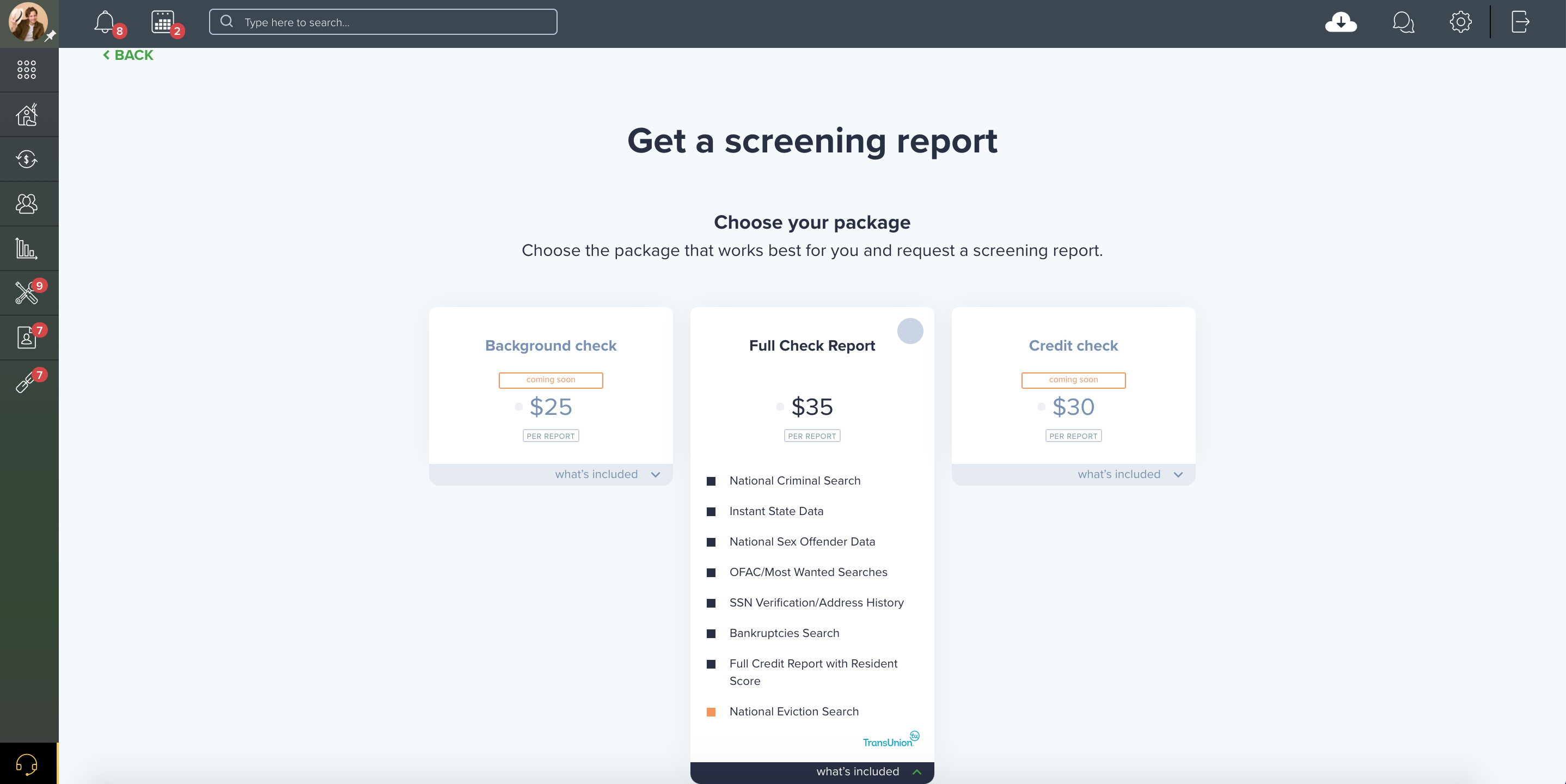
TenantCloud offers the Full Check screening report powered by TransUnion.
A Full check is a process a person or company uses to verify that an individual is who they claim to be, and provides an opportunity for someone to check a person’s criminal record, education, employment history, and other activities that happened in the past in order to confirm their validity. It shows the record of the borrower’s credit history from a number of sources, including banks, credit card companies, collection agencies, and governments.