
Most landlords understand the struggle of putting in the work to prep a rental unit, listing it, waiting, and then… crickets. Or even worse, wasting time sorting through an entire roster only to find unqualified applicants who don’t meet their rental standards. All things considered, learning how to find renters for your property is a must.
But attracting high-quality renters and convincing them to sign a lease isn’t just a simple task on your to-do list. It’s a process that will make or break your cash flow for the foreseeable future. The decision also affects how much work you will need to put into repairs and maintenance if a problematic tenant damages your property.
So, whether you’re a property manager wondering how to find a good tenant or a new landlord just getting started, this article will help you connect with and choose the best possible candidate for your rental. Keep reading to learn everything you need to know about finding and selecting your next qualified tenant.
What Actually Makes a “Quality Tenant”?
Landlords may define a “quality tenant” differently, but most agree on a few core traits. Typically, a strong tenant pays rent on time, maintains the rental property, and follows the lease terms. From a property owner’s standpoint, a tenant should make the rental arrangement feel hands-off after move-in.
Next up is rental history. With few exceptions, you don’t want to rent to a tenant who has a history of evictions or who cannot provide a good reference from a previous landlord. A quality tenant should also show a consistent track record of meeting financial obligations on time, not just a strong credit score.
Also, pay close attention to the tenant’s communication and reliability. If they miss a scheduled rental tour or take several days to respond to time-sensitive questions about the unit, you may want to take their flakiness as a sign to start looking elsewhere.
No matter the finer details of your tenant standards, the criteria for selecting a “quality” tenant must stay objective and legal. As such, ensure your selection process complies with all federal Fair Housing laws and avoid basing any rental decisions on protected characteristics like race, religion, or disability.
By using objective, legally supported criteria, finding good renters becomes a repeatable process rather than a matter of crossing your fingers and hoping for the best.
Start With a High-Quality Rental Listing
Searching for good tenants starts long before you conduct a tenant screening.
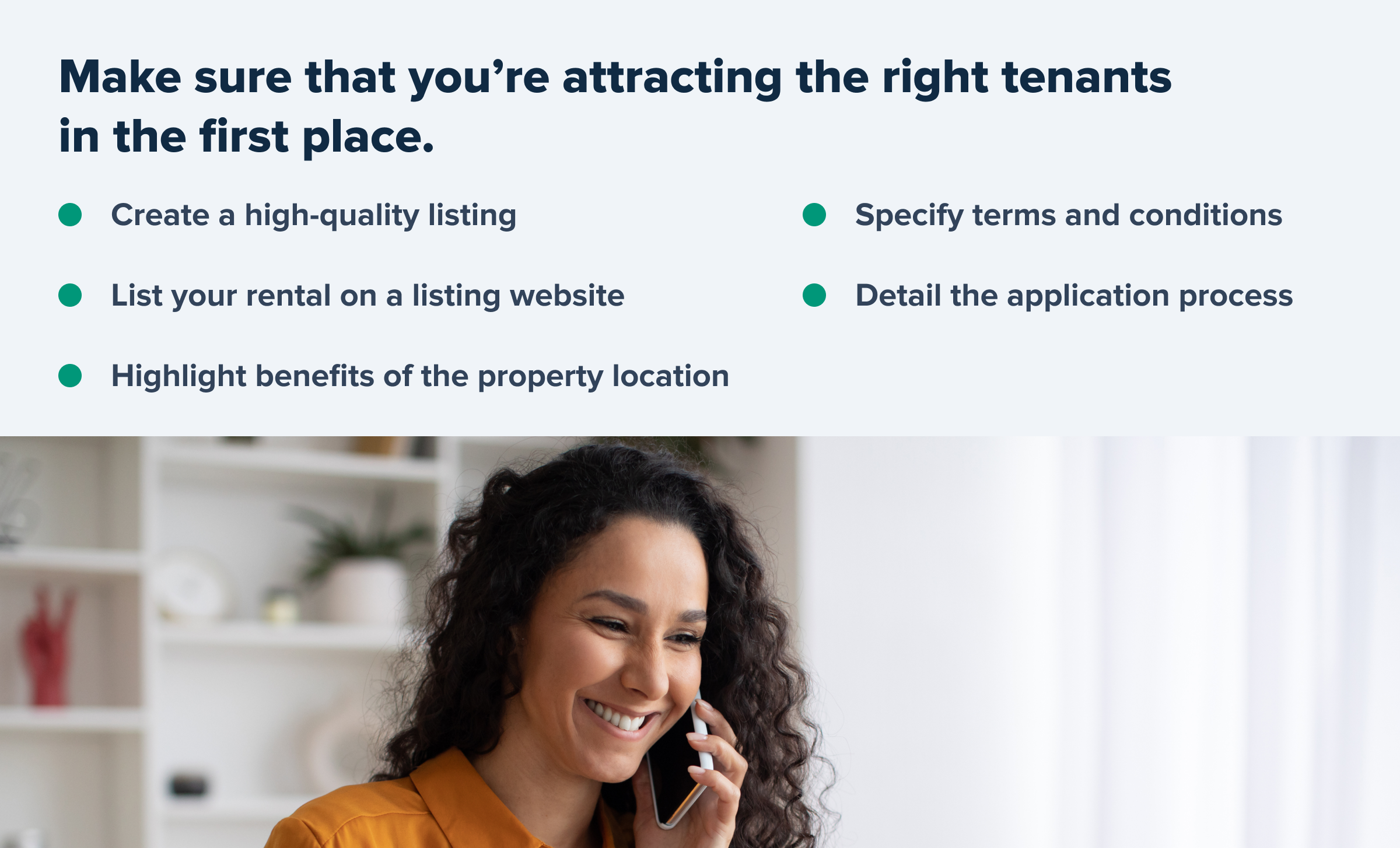
To begin, list your rental property on rental listing sites and social media platforms frequented by prospective tenants. Next, use digital tools that automatically syndicate listings across several platforms so you don’t have to do it manually.
Your listing should include high-resolution photos, detailed descriptions, and key information about the property, including the price, pet policy, utilities, and lease terms. When drafting your listing, lean into the rental’s strong suits, but avoid unnecessary fluff. Otherwise, qualified tenants may become disengaged and skip over your listing.
When tenants reach out, respond quickly and give them clear next steps to schedule a tour or submit a rental application. By creating a strong listing and communicating clearly, you’ll naturally attract better applicants and spend less time filtering out poor fits.
Define Rental Criteria Before Scheduling Showings or Accepting Applications
Define your rental criteria before accepting any applications to avoid Fair Housing violations. Clearly publish the standards you will use when finding renters, and ask yourself some important questions:
- Do I want tenants with income that is double or triple the rent?
- What is my acceptable range for a tenant’s credit score?
- Will I consider tenants with prior evictions or criminal history?
In all cases, make sure your standards align with local and federal laws. Colorado, for example, only allows landlords to require income of 2x the rent. States like California limit landlords’ look-back periods to the prior 7 years. In many states across the country, you may consider only evictions and criminal history, as permitted by law. It bears repeating: Know all of the relevant laws that apply to your rental.

Write out your cut-and-dried criteria, make them easy for applicants to find, and apply these standards consistently to all applicants. By publishing your requirements in the rental listing, you can reduce unqualified leads, limit wasted applications, and breeze through the leasing process more quickly and with greater control.
Pre-Screen Tenants Before Tours
Before you schedule tours or send out applications, use pre-screeners to confirm that interested tenants meet your baseline rental standards. These short questionnaires gather details like the tenant’s desired move-in date, income, pets, and household size. By capturing this information at the outset, you can save both parties time by filtering out applicants who fall short of your non-negotiable criteria.
Reach out to interested tenants to confirm they meet your standards before showing the unit. Ask a few key questions, respond quickly, and make your application requirements clear from the start. Prompt, thorough communication matters, so don’t leave applicants waiting if you want to avoid letting a qualified renter slip through the cracks.
By conducting pre-screenings, you can move quickly to identify suitable tenants, while those who don’t qualify can move on to their next option. Many landlords overlook this step or don’t use pre-screeners properly, so you can stand out by leveraging them from the start.
Use a Consistent Tenant Screening Process
After showing your property and receiving rental applications from interested parties, put each candidate through a thorough screening process to ensure you leave no stone unturned. Start by verifying the tenant’s income and employment to determine whether they can pay rent on time each month.
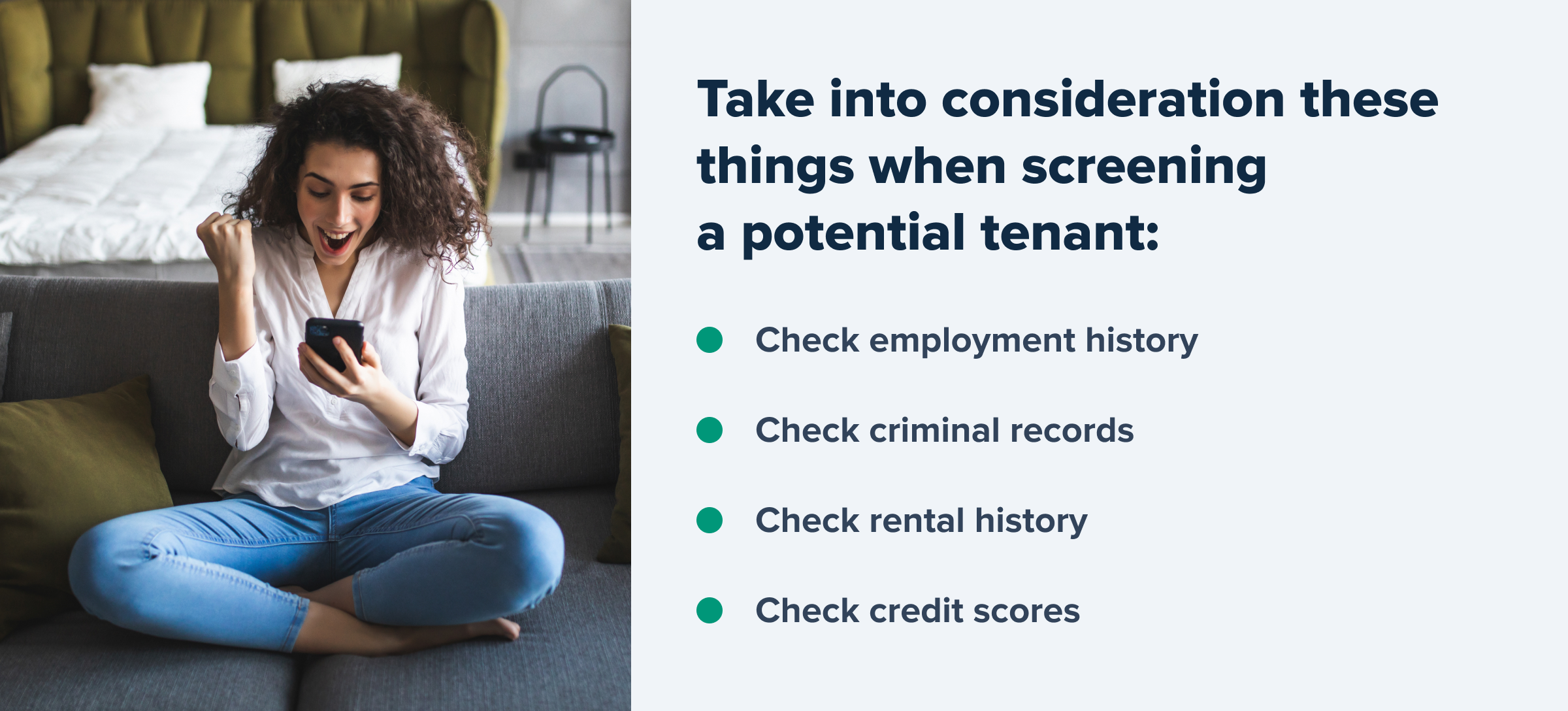
Next, run a credit check on each tenant and focus on overall credit trends and patterns rather than just the score. Review rental history and references, watch for red flags, and conduct a full background check to investigate a renter’s potential criminal history (where legally permitted, of course).
While you should maintain high standards, consider the context behind certain issues before making a decision. For example, if you deny every applicant with a low credit score, you may miss out on a reliable tenant whose credit took a temporary hit due to medical debt or unexpected financial hardship.
Legal note: All landlords must apply the same screening process to each applicant to comply with federal Fair Housing laws. Avoid making subjective decisions or relying on gut instinct; instead, stick to the rental criteria you defined earlier to reduce legal risk and consistently identify qualified tenants.

Move Quickly From Approval to Lease Signing
When you fine-tune your process for finding a strong tenant for your vacancy, don’t hesitate to reach out and approve their application as soon as possible. Desirable tenants typically have other options and are likely already considering other rentals, so stalling can cost you the lease.
To avoid delays and lock in your next tenant quickly, streamline the entire leasing process from start to finish. The workflow is simple and sequential: List your property, pre-screen interested tenants, show the unit, send applications, conduct screenings, approve tenants, and send the lease for e-signing as quickly as possible. After that, collect their security deposit, send out a move-in checklist, and hand over the keys.
Without a signed lease agreement in hand, the tenant you worked diligently to select may still move on to another rental, leaving you an unexpected vacancy. With that outcome in mind, you need to move quickly to secure a strong tenant before another landlord swoops in and pushes you back to square one.
Should you use a property management company to find your next renter?
Landlords who don’t know how to find renters often rely on property management companies to fill their vacancies. In some cases, a third-party property manager may make sense for landlords with limited time and multiple units to fill, or for remote property owners who need help with on-site tasks like giving tours.
While you can save time and benefit from a property management company’s reputation, marketing reach, and screening experience, you’ll pay the price through management fees that can add up quickly. Instead, many savvy landlords use property management software to handle many of their day-to-day tasks.
Find Rentals Faster with TenantCloud
TenantCloud offers a full suite of leasing tools to help you find and maintain qualified renters. So, even if you’re unsure how to find a renter, TenantCloud’s built-in listing, screening, and leasing features will help you fill vacancies while staying compliant. Try it free for 14-days.
FAQs: Finding Tenants for Rental Properties
Where is the best place to find tenants?
In 2026, most renters look for their next rental housing online. Rental platforms such as Zillow, Trulia, and Apartments.com serve as landlords’ primary source for rental leads, though you can also create your own rental listing website using property management software like TenantCloud. By combining different channels, you can expand your reach and attract more qualified renters.
How do I find tenants fast?
To find new tenants quickly, focus on a few key areas during the rental listing process. Research comparable properties in your area to set competitive pricing and invest in high-quality photos and property descriptions to create strong, attention-grabbing listings that stand out online. Lastly, respond quickly and conduct pre-screenings to save time and reduce back-and-forth for both you and potential renters.
What should I look for in a tenant screening?
Look into the tenant’s income, credit, and rental history, along with any criminal background (as allowed by law), to build a complete picture of the applicant. To avoid violating Fair Housing regulations, evaluate tenants based on objective criteria and apply the same standards to all applicants.
Can I reject a tenant application?
Yes, landlords can legally reject tenant applications as long as they base their decisions on objective criteria. Those standards, however, must comply with Fair Housing laws, and landlords must apply them consistently to all applicants, regardless of protected characteristics such as race, religion, disability, or familial status.
Landlords should document each step of the tenant selection process and keep their criteria clearly written and easily accessible to protect against potential Fair Housing violations.
How can I avoid bad tenants?
Landlords can avoid bad tenants by streamlining their rental listing and application process. Start with strong rental listings, use clearly written criteria to filter out unqualified tenants, conduct pre-screenings to confirm applicants meet your standards, and apply consistent requirements when reviewing tenant screening reports. While bad tenants happen, this can help reduce the chances.
Do I need a rental application for every tenant?
Yes, landlords should use the same rental application for every tenant. Doing so ensures a fair and consistent screening process while providing legal protection.
Without a detailed rental application, landlords risk selecting unqualified tenants or violating Fair Housing laws. Digital property management platforms like TenantCloud can automate the sending, receiving, and reviewing of rental applications.