

It’s a position any landlord or property manager hopes never to be in: informing a tenant that their rent is past due. Late payments happen for a variety of reasons, even with the best tenants. Whether you didn’t automate rent collection properly or it just slipped your tenant’s mind, you have to put your late rent notice in writing.
While sending a formal late rent notice letter can be uncomfortable, it’s an essential step to protect yourself legally. Not only can it expedite collecting the past due rent, but it also creates a paper trail should you have to start the eviction process.
In this helpful guide from TenantCloud, we’re navigating the legal intricacies of sending a late rent notice letter. We’ll explore some of the must-have items in your letter and the best delivery methods. You’ll also find out how a free late rent notice template can help you get started, plus some tips to avoid late rent payments in the first place.
TL;DR
A landlord issues a late rent notice letter to their tenant if they still haven’t paid rent after the due date grace period. Late rent notice includes how much the tenant owes and the due date, as well as the consequences of continued non-payment. If the tenant doesn’t pay by the deadline in the late rent notice, the landlord may escalate the case by sending a notice to pay or quit. Following this notice, eviction is the next legal step if the tenant still hasn’t paid.
What Is a Past Due Rent Notice?
A late rent notice letter, also called a past due rent notice, is a formal letter informing a tenant of their overdue payments. In addition to serving as a reminder of non-payment, it specifies how much is due and helps ensure legal compliance. If the tenant continues to withhold rent, this letter also serves as a first step if you need to initiate eviction proceedings.
Timelines and legal requirements for past due rent notices vary based on the terms of your rental agreement and local regulations. However, there are several important pieces of information that every late rent notice letter should include.
What Items to Include in a Late Rent Notice Letter
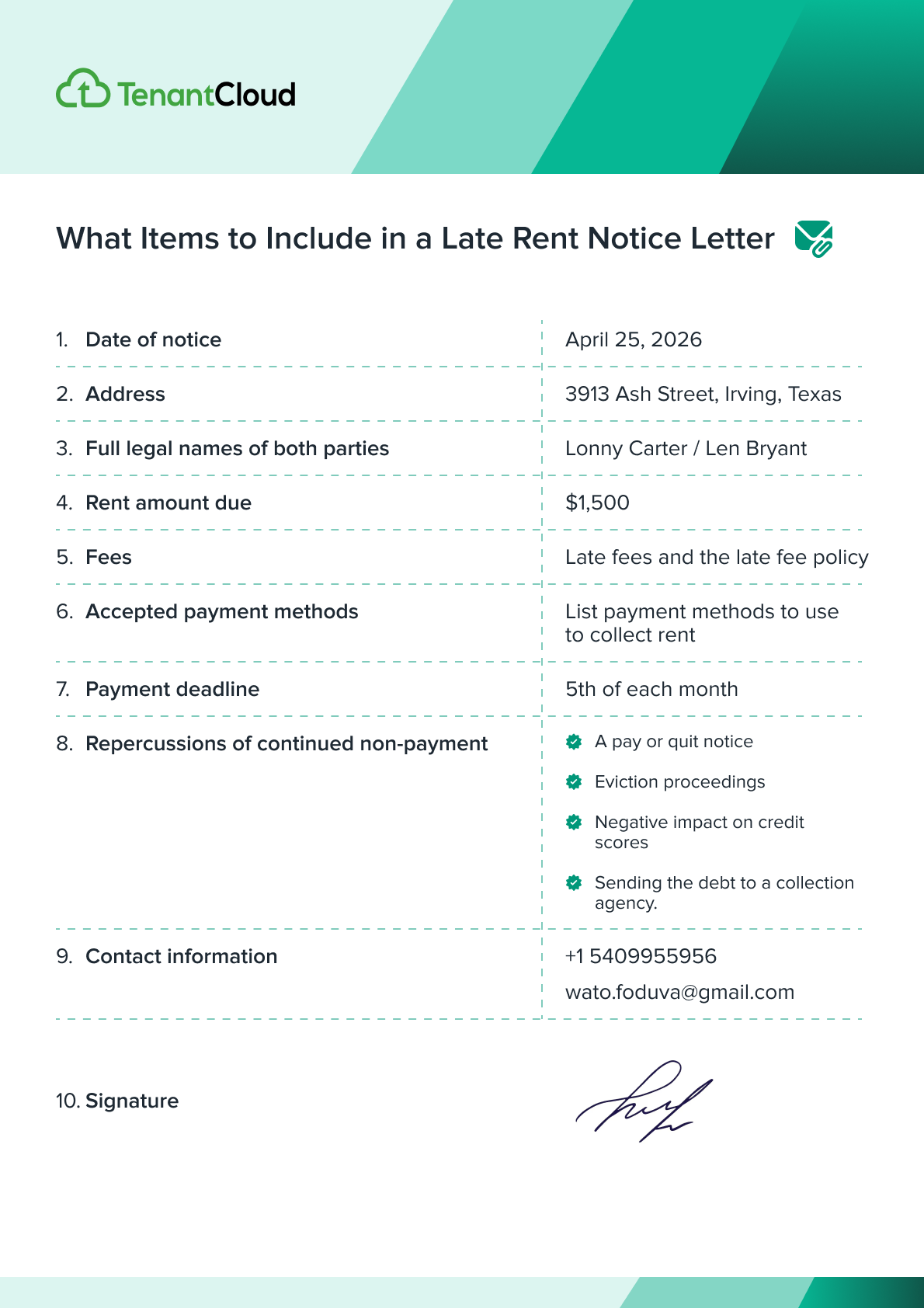
The purpose of a late rent notice is to establish a traceable written record if the non-payment escalates to legal proceedings. State law is also clear about what constitutes legal notice of late rent in your area. In most cases, a late rent notice letter should include:
- Date of notice: Include the date you issue the notice to help establish a timeline for legal proceedings.
- Address: Specify the full street address of the property the tenant is occupying (including unit number for apartments, duplexes, etc.).
- Full legal names of both parties: Writing the full legal names of the tenant and landlord/property manager as spelled in the lease agreement.
- Rent amount due: Be sure to include the total rent amount, as well as which payment period each missed payment is from.
- Fees: Create an itemized list of late fees, making sure to adhere to the late fee policy in the lease agreement.
- Accepted payment methods: List which payment methods you’re willing to use to collect rent (Cash payments are best avoided for late rent payments, but if you accept cash, write an invoice for your rent ledger).
- Payment deadline: Include a firm, specific deadline for the payment, after which the landlord may escalate the issue.
- Repercussions of continued non-payment: Spell out the potential outcomes if the tenant doesn’t submit payment by the deadline. These may include:
- A pay or quit notice (more on that later)
- Eviction proceedings
- Negative impact on credit scores
- Sending the debt to a collection agency.
- Contact information: Include the phone number and/or email of the landlord so the tenant can reach out with any questions.
- Signature: The landlord or property manager must sign the letter for it to constitute a legal notice.
Check your local landlord-tenant laws for what official late rent payment notice letters need to include.
Late Rent Notice Template Tips: How to Write Your Past Due Notice
Writing a late rent notice letter may feel overwhelming. It’s an important legal document after all. However, as long as you follow your city and state’s guidelines, writing this formal letter is a fairly straightforward process.

Most late rent notice letters are one page. Here’s a typical outline:
- Header: This is where the tenant and landlord’s full names, rental property address, and contact information go.
- Intro: Start with a neutral, formal greeting, then a brief overview of the payment details stating that the tenant’s rent payment is overdue, how much they owe, and a reminder to pay the balance by the specified deadline.
- Body: Add some context about the terms of the lease agreement, and the next steps if the tenant doesn’t pay the rent by the deadline. You may also want to encourage the tenant to contact the property manager, depending on the landlord-tenant relationship.
- Conclusion: Thank the tenant for their prompt cooperation and end with the landlord or property manager’s signature and printed name.
The main thing to remember when drafting your letter is to keep it formal and direct. You may also want to attach a separate, itemized invoice when you send the letter.
There are plenty of late rent notice letter templates available online, which can help make it easier to write. Just make sure to edit the template so your letter complies with local laws and matches the terms of your lease agreement.
When to Send a Late Rent Notice Letter
Rent is due on the first of the month for most tenants, so should you send the late rent notice on the second? Yes, but only if there isn’t a grace period.
Most lease terms include a “grace period” after which rent is officially considered late. This period depends on the lease as well as state laws, but is usually a few days after the due date.
If the tenant still hasn’t paid rent at the end of the grace period, it’s best to send official notice the next day. This demonstrates to the tenant that you take late payments seriously and creates a record of tenant communication for legal purposes.
How to Send Late Rent Notices
A late rent notice letter is a step in the legal process if you have to take further action against your tenant, so it’s vital to use a reliable, legally acceptable method of delivery. Here are some ways landlords can deliver past due notices to tenants:
- Certified mail: The most reliable and legally accepted method, certified mail requires the tenant’s signature and provides written proof that the tenant received it.
- In-person delivery: Hand the notice directly to the tenant face-to-face. You may want to bring a witness to verify that you delivered notice.
- Email: Only allowed in some states and only when agreed to in the lease agreement. Email is an easy delivery method for some situations.
- Posting: Also permitted only in some states, landlords may attach the overdue rent notice to the tenant’s door.
If your tenant has a good on-time payment history, you might consider starting with a friendly rent reminder via phone call, text, or email. It could be a simple case of forgetfulness or a technical issue with your payment system. If you have to remind tenants repeatedly, or your reminder doesn’t work, send a formal letter.
Pay or Quit Notice vs Late Rent Notice
While a late rent notice letter and a pay or quit notice are similar, they carry different legal weight. A late rent notice letter is usually the first step, acting as the initial written notice that rent is late.
A pay or quit notice, on the other hand, is a formal demand for the tenant to pay rent or vacate the property. The next step after a pay or quit notice is an eviction notice. In some cases, landlords may issue a pay or quit notice at the same time as the late rent notice, such as for a tenant who habitually pays rent late.
Is Accepting Partial Rent Payments Ever a Good Idea?
It’s usually best not to accept partial payments, as this can delay the eviction process. Depending on the state, you may also be forfeiting certain legal protections by accepting a partial payment. Requiring payment in full prevents any legal confusion over how much the tenant owes and the due dates.
However, some landlords may consider accepting partial rent payments in special circumstances. If a usually reliable tenant has a medical emergency, for example, setting up a payment plan may help prevent a costly move-out.
Be sure to consult with a lawyer before accepting a partial payment to confirm the legal implications.
Can a Tenant Ever Legally Withhold Rent?
There are some situations where a tenant is within their rights to withhold rent, but they still have to go through the appropriate legal channels. Tenants usually withhold rent if the landlord neglects a problem that makes the property unsafe or uninhabitable in some way, such as:
- Extreme pest infestations
- Non-functioning utilities like water or electricity
- Toxic substances like lead paint or asbestos
- Severe structural issues that pose a safety hazard
Even if the tenant retains legal representation to begin the withholding process, they still have to follow the proper procedures:
- Documenting the habitability problems
- Sending written notice of the issues to the landlord
- Saving rent in an escrow account for when the repairs are complete
- Filing complaints with the local housing authority
As long as landlords maintain their rental properties and keep them safe to occupy, tenants usually don’t have a legal reason to withhold rent.
When to Take Legal Action for Unpaid Rent
After you send a formal late rent notice letter, the tenant has until the date you specified to pay their outstanding balance in full, including the late rent and any applicable late fees. If the tenant doesn’t pay the overdue rent amount due by that date, the next step is a notice to pay or quit.
Once the pay or quit date passes, landlords may initiate eviction proceedings. In most states, the landlord has to issue a formal pay or quit notice before they can issue an eviction notice.
Example Timeline
- Rent due date: The tenant doesn’t pay the full rent amount.
- Grace period expires: After the grace period outlined in the lease, the tenant still hasn’t paid. The landlord sends a formal notice of late rent, specifying a payment deadline.
- Late rent notice deadline: The deadline passes, so the landlord issues a 3-day pay or quit notice.
- Pay or quit notice: If the tenant still hasn’t paid by the pay or quit deadline, the landlord may begin the eviction process.
- Eviction proceedings: The landlord files an unlawful detainer suit and the local court judge authorizes removal of the tenant.
What Rent Collection Methods are Illegal for Landlords?
Both landlords and tenants have legal rights, and it’s crucial that you stay in compliance with the law, even if your tenant’s monthly rent payment is late.

All of the following rent collection methods are illegal:
- Verbal or physical threats
- “Self-help” eviction tactics like changing the locks or shutting off utilities
- Exorbitant late rent fees (Some states have specific limits, while others require late fees to be “reasonable.”
- Serving a pay or quit notice or eviction notice during the grace period specified in your lease agreement
- Discrimination as specified in the Fair Housing Act.
Preventing Late Rent Payment
No landlord wants to have to send a late rent notice letter. The best solution is to make it as easy as possible for your tenant to pay rent on time. Here are some ways you can encourage your tenant to avoid missed payments:
- Screen tenants thoroughly for eviction records and verify they can reliably pay rent on time.
- Use an online rent collection app to simplify automatic payments.
- Offer a small discount for early rent payments or paying for multiple months in advance.
- Give your tenant a way to automate rent payments.
FAQs
How should landlords deliver a late rent notice letter?
The best methods for delivering a late rent notice letter are usually certified mail or in-person delivery. However, some states allow landlords to deliver notice by email if agreed to in the lease agreement.
What happens if a tenant still doesn’t pay after a late rent notice?
If the tenant doesn’t pay the late rent and late fees by the deadline in the late rent notice letter, a landlord can issue a pay or quit notice, followed by an eviction notice.
Should landlords accept partial rent payments?
It’s usually a bad idea to accept partial payments for late rent, as they can complicate legal proceedings and lead to confusion about the amount the tenant owes.
Can landlords file for eviction without issuing a late rent notice?
No, in almost every situation, a landlord needs to issue a formal notice of late rent before initiating eviction proceedings.
How much are late fees for rent?
In most states, a typical late fee is a set percentage of the rent (5% is common) or a flat rate. Some states have maximum late fees, while others merely require the fee to be “reasonable.”


