
TL;DR
• A landlord recommendation letter confirms a tenant's payment history and how they behaved as a renter, and it can genuinely help that tenant land their next place.
• Writing one honestly takes almost no time and tends to build goodwill, plus it can smooth the way for a good tenant to move on without dragging out your re-leasing timeline.
• Get templates and pointers on handling the request when the tenant's history was more mixed than glowing, right in the guide.
A landlord recommendation is a document written by a landlord to describe a tenant’s reliability, renting experience, and behaviour during a lease term. While not all landlords choose to provide one, many landlords request or provide this type of reference letter to support a prospective tenant’s rental application.
From a landlord’s perspective, a well-prepared landlord letter should be factual, balanced, and compliant with the law. The goal is to provide helpful information about the tenant’s rental history without sharing anything inappropriate or discriminatory.
What's a Landlord Recommendation Letter?
A landlord recommendation letter (sometimes called a landlord reference letter) is a written statement confirming key details about a previous tenant. It typically includes a tenant’s name, the address of the rented property, the lease term, and whether the tenant paid their rent on time.

In most cases, the letter written by the tenant’s previous landlord is submitted to a prospective landlord during the rental application process. It can complement a background check, employment verification, and other parts of tenant screening. A landlord recommendation does not replace a formal screening process. Instead, it provides additional context about the tenants reliability, rent payments, and overall tenancy experience.
Why a Landlord Reference Letter Matters for a Rental Property
For a rental property owner choosing the right tenant is essential. A landlord reference letter offers insight into how the tenant handled their previous lease agreement. This may include elements such as:
- Whether the tenant paid their rent on time
- The monthly rent amount
- Whether there were any late rent payments or lease violations
- How maintenance requests were handled
- Whether the property was left in good condition when they left
A reliable tenant who consistently paid rent on time and followed the tenant’s previous lease terms can reduce risk for a new landlord. Also, a carefully worded letter may note late payments or complaints without over exaggerating the situation.
Key Elements to Include
When you write a landlord reference letter, it is generally advisable to focus on objective, verifiable information. A clear and structured letter template can help to ensure consistency and fairness is maintained at all times.
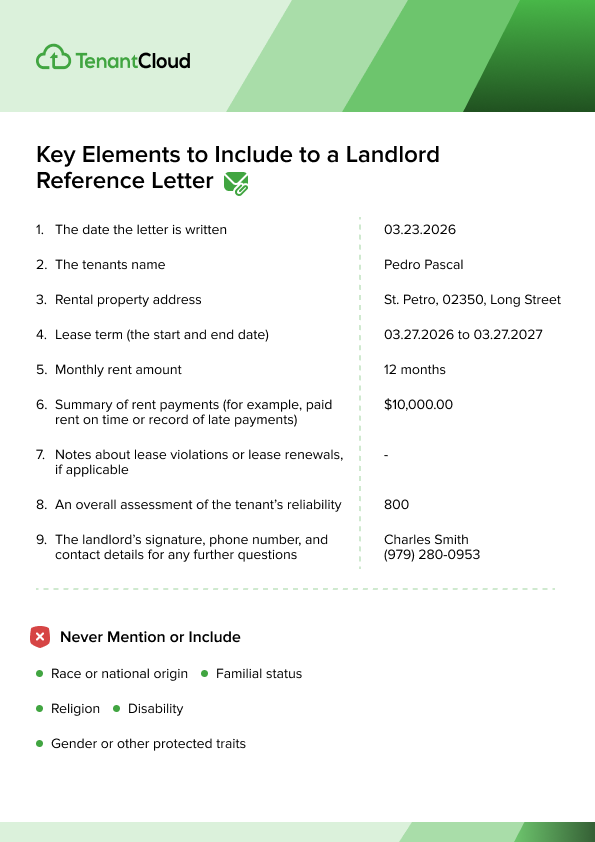
Most landlords would include the following elements within their letter:
- The date the letter is written
- The tenants name
- Rental property address
- Lease term (the start and end date)
- Monthly rent amount
- Summary of rent payments (for example, paid rent on time or record of late payments)
- Notes about lease violations or lease renewals, if applicable
- An overall assessment of the tenant’s reliability
- The landlord’s signature, phone number, and contact details for any further questions
If the tenant rented the property for multiple years, you may also want to briefly summarize their rental history across that period. Some landlords also reference a tenant ledger to confirm any payment records you have kept.
Legal Considerations and Fair Housing Laws
When preparing a landlord recommendation letter, always remain mindful of fair housing laws. Under federal law, and often under state and local laws, it is illegal to discriminate based on protected characteristics such as national origin, marital status, religion, gender, or other personal details. Your reference letter should never mention any of the following details:
- Race or national origin
- Familial status
- Religion
- Disability
- Gender or other protected traits
Stick to the facts as much as possible when talking about the tenancy and the tenant themselves. For example, you may state that the tenant paid rent on time, complied with the lease agreement, and did not have any lease violations on their file. Avoid any personal opinions that are unrelated to the rental experience. If you are unsure what to include, you can review guidance from reputable housing publications, or consult local laws in your area for clarification.
How to Write a Landlord Recommendation Letter: Step by Step
If you are unsure how to write a landlord recommendation letter, the following approach may be helpful:
- Confirm your records, review the tenant’s rental history, rent payments, and any documented complaints or maintenance requests
- Use a consistent letter template, and use a landlord reference letter template to help ensure you do not omit key information.
- Keep the tone professional and factual, and avoid any emotive language.
- Proofread carefully, and ensure names, dates, and the rental property address are accurate
- Provide contact details, such as your phone number in case the prospective landlord has further questions or needs further details.
Maintaining a strong landlord tenant relationship can also make these requests much easier to manage. As mentioned earlier, keeping communication and professionalism at the forefront will help you hold onto this positive relationship.
Sample Landlord Reference Letter Template
Below is a general sample letter that you could use and adapt to your specific situation and local laws:
“Date: (Insert date here) |
To Whom It May Concern,
I am writing to provide a landlord recommendation letter for (Tenant’s name), who rented property at (address) from (start date) to (end date). During this lease term, the monthly rent amount was (x). (Tenant’s name) paid rent on time throughout the tenancy, with no record of late rent payments. The tenant complied with the terms of the lease agreement and maintained the property in good condition. Maintenance requests were reasonable and communicated appropriately. There were no documented lease violations during the tenant’s previous leaves. Based on my experience as one landlord. I would consider (Tenant’s name) to be a responsible and reliable tenant. Please feel free to contact me at (phone number) if you require any further details. Sincerely, |
(Landlord’s name) (Landlord’s signature)” |
This sample landlord reference letter can be adjusted if there were any late payments or other issues. For example, you may state that the tenant generally paid rent on time, but had two late payments during the lease term.
Transparency can help other landlords to make informed decisions, so it’s very important to be honest in your letter.
Summary
A reference letter is an important part of a tenant and landlord journey. It helps landlords make informed decisions and can be a reward for being a reliable tenant. As a landlord, it is essential to understand how to read one and write one yourself, to make the rental community a better place to be.
Find the Right Tenants in TenantCloud
Reviewing a landlord recommendation is just part of finding a great tenant. As a landlord, make sure you’re conducting a thorough background check as well as checking any other landlord references.

TenantCloud is a property management software that offers built-in rent payments, tenant screening, applications, and more. Try a free trial today.
Frequently Asked Questions
What is the difference between a landlord recommendation letter and a landlord reference letter?
In most cases, the terms are used interchangeably. Both refer to a document written by a tenant’s previous landlord describing their rental history and conduct.
Can a landlord refuse to write a reference letter?
Yes. Not all landlords are required to provide a recommendation letter. Some past landlords may choose to confirm only basic details, such as dates of tenancy and monthly rent.
What if the tenant had late rent payments?
It is generally advisable to state factual information. If there were late payments, you may briefly note them without making any personal judgements.
Should a landlord mention a low credit score?
Typically, credit information is verified through a background check or screening report. A landlord reference letter usually focuses on rent payments, lease compliance, and overall tenancy, so there’s no need to include this in your letter.
Is a landlord’s signature required?
A landlord’s signature is strongly recommended, whether handwritten or via digital signature. This confirms your identity and authenticity, which will be taken into account by the reader.
All in all, a carefully written landlord recommendation letter can support a prospective tenant’s future housing goals while helping a future landlord assess the risks. By focusing on accuracy, compliance, and clarity, you can provide a responsible and helpful reference.
What features are essential in property management software without paying for extras?
At minimum, look for: online rent collection, maintenance tracking, tenant screening, basic accounting and reports, secure document storage. Everything else like advanced analytics, integrations, and and marketing tools, depends on your portfolio size and long-term goals.