

Learning how to rent out your house is one of those decisions that sounds straightforward – until you start working through the details.
Whether you're relocating and want to hold onto your property or are simply building a source of passive income, renting out your house can be a smart financial move – as long as you understand the process before you begin.
This guide covers everything you need to know before you get started, including:
- What to do before you list
- How landlord-tenant laws work
- How to price your rental
- How to screen tenants
- How to structure a lease
- How to collect rent reliably once a tenant is in place
It also covers how to rent out a room in your house for homeowners who want to generate extra income without vacating their home. While it may feel similar to renting out an entire property, it’s actually a different situation with its own unique considerations.
TL;DR
Renting out your house can be a smart financial move, but getting it right means working through a thorough preparatory checklist before your first tenant moves in, from understanding local laws and setting a competitive rent price to signing a solid rental lease agreement and setting up a reliable system for collecting rent.
This guide walks through each step so you can launch your rental business with confidence.
Check the Fine Print Before Renting Out Your House
The first mistake most first-time landlords make is jumping straight to writing a listing before they've confirmed that they're allowed to rent out the property. A little upfront work here prevents a lot of legal and financial headaches later. Here’s how we recommend getting started.
- Check your mortgage terms. If you still have a mortgage on the property, your loan agreement may require you to notify your lender before renting it out, or get their approval. Some mortgage types have occupancy requirements that restrict or delay your ability to rent. Read the terms carefully or call your lender directly before you proceed.
- Check your homeowners’ association rules. If your property is subject to an HOA, the association's bylaws may restrict rentals, require landlord registration, impose minimum lease lengths, or give the HOA approval rights over tenants.
- Check local zoning laws. Not every residential zone permits rental properties, and some areas have specific rules around short-term rentals, room rentals, or accessory dwelling units. Your local housing authority can clarify what's permitted for your specific property and situation.
Get Your Home Rental-Ready
Once you’ve confirmed that you’re able to rent out your property and everything on the legal front can move forward, you’ll need to get your place ready for tenants. This is a different consideration from the choices you might make if you were staying in the unit.
First, walk through every room with a critical eye and address anything that could fail an inspection, deter a tenant, or become a recurring maintenance problem. This often includes:
- Leaky faucets
- Worn flooring
- Outdated fixtures
- Safety issues like smoke detector function
- Anything else that looks cosmetically rough
You’ll also want to clean your home thoroughly. Many would-be landlords hire professionals to do this cleaning, since it can be extremely time-consuming. While it can get pricy, the cost of this cleaning is worth it to attract tenants who are looking for clean, well-maintained units.
From there, document the condition of your home in detail. Photograph every room, every wall, every appliance, and any existing damage. This documentation becomes your protection if a tenant disputes what was pre-existing versus damage they caused. Ensure you do this before your first lease (and any subsequent leases) are signed, and keep copies in an easily accessible location.
Understanding Landlord-Tenant Laws
Before you price your property, write a lease, or screen a single applicant, you need to understand the legal landscape you're operating in. Landlord-tenant laws vary significantly by state, and local ordinances can add another layer on top of that. This is the area where first-time landlords are most likely to get into trouble.
At the federal level, the Fair Housing Act prohibits discrimination in any aspect of renting (including advertising, screening, lease terms, and enforcement) based on race, color, national origin, religion, sex, familial status, or disability. This applies even if you own one property and are renting it out informally. Violations can result in significant fines and legal disputes, so it's essential to apply the same screening criteria to every applicant without exception.
From there, your state's landlord-tenant laws govern a wide range of specifics:
- How much you can charge for a security deposit and where it must be held
- How much notice you must provide before entering the property
- What habitability standards you must meet as a landlord
- What the eviction process looks like and what notice periods are required
- Rules around late fees and grace periods
Some states also have rent control laws that cap how much you can charge or how much you can increase rent from year to year.
Local landlord-tenant laws may require additional disclosures in the lease, licensing or registration for rental properties, or specific language around tenant rights. Landlord-tenant law also changes over time, so you’ll need to keep your knowledge current as you continue to rent out your home.
How to Set a Competitive Rent Price
Setting the right rent price is one of the most consequential decisions you'll make as a new landlord. Set it too high and your property sits vacant, but set it too low and you leave money on the table every single month.
The median rent for a three-bedroom single-family home rental in the United States was $2,100 in 2025. However, what matters most is the figures from your local area. The best way to understand that is to comb through comparable rental listings in your area.
Use the search tools on Zillow, Redfin, or Realtor.com and filter for properties similar to yours. From there, factor in your actual costs. Your rent amount needs to cover your monthly mortgage payments, property taxes, landlord insurance premiums, and an estimate for ongoing maintenance and vacancy periods.
One more thing to keep in mind: rental income is taxable, but many of the expenses associated with running a rental property are tax-deductible, including mortgage interest, property taxes, insurance premiums, maintenance costs, and depreciation. An accountant can help you understand your obligations and can set up your expense tracking correctly from day one.
How to Create and Market Your Rental Listing
Now that you understand how to price your unit, you can get started on creating your listing. A strong listing is your first impression with prospective tenants, and in a competitive rental market, it can separate a property that fills quickly from one that sits.
Good listing photos make a huge impact. Get professional photos taken if you can, but even if you can’t, make sure to avoid dark, blurry, or misleadingly edited photos. Tenants have seen enough listings to recognize when photos don't match reality, which damages trust immediately.
Your listing should clearly state the basics:
- The rent amount
- Lease term
- Number of bedrooms and bathrooms
- Square footage
- What utilities are included
- The pet policy
- Any standout amenities, including off-street parking, in-unit laundry, or proximity to major employers and transit.
Be as specific as possible. Vague listings generate fewer inquiries.
Where to list your rental
Where you list matters as much as how you list. TenantCloud syndicates listings to multiple platforms simultaneously so you get broad reach without having to manually post and update each site.
How to Screen Tenants with a Rental Application
Tenant screening is where you protect your investment. One bad tenant can mean months of lost rent, significant property damage, and the expense and stress of an eviction. The time you invest in screening thoroughly upfront is returned many times over in tenants who pay on time, take care of the property, and stay for the full lease term.
Here are the steps you should take to develop a thorough and thoughtful tenant screening process.
- Start with a complete rental application that collects the basics: contact information, current and prior addresses, employment history, monthly income, and references from previous landlords. This alone filters out applicants who aren't serious or can't document a stable income.
- From there, run credit reports to assess financial reliability and payment history, criminal history checks, and reports on eviction history. Income verification also confirms that a tenant can realistically afford the rent.
- Apply the same screening criteria to every applicant without exception. Varying your standards based on who's applying, even with good intentions, can expose you to Fair Housing Act violations. Document your criteria before you start accepting applications so you have a clear, consistent record.
- Don't skip the reference check with previous landlords. A credit report tells you about financial history, but a prior landlord tells you about how someone actually lives in a property and interacts with landlords and neighbors.
- Decide whether you want to (or can) charge a rental application fee to help cover the cost of some of the background checks.
TenantCloud's tenant screening is powered by TransUnion and includes credit, background, and eviction history in one integrated workflow, so you're not managing separate services for each piece of the screening puzzle.
How to Write a Lease Agreement That Protects Both Parties
A lease agreement is a legally binding contract, not a formality. It's the document you'll reference if a tenant disputes a charge, breaks a rule, or needs to be removed. The more clearly it's written, the less likely any of those situations are to become a genuine problem.
A solid lease agreement should include:
- Rent amount, due date, and grace period. Be as explicit as possible.
- Security deposit terms. The amount, what it can be used for, and the timeline for return after move-out.
- Lease term. The exact start and end dates, and what happens at the end.
- Utility responsibilities. List which utilities the landlord covers and which the tenant pays.
- Pet policy. If you allow pets, specify the types, sizes, any pet deposit, and any associated monthly pet fee.
- Maintenance responsibilities. Define what tenants should report, how to report it, and what the expected response time is.
- Early termination terms. What notice is required, and whether any fee applies if a tenant needs to break the lease.
- Entry notice requirements. Most states require landlords to provide 24 to 48 hours' notice before entering the property for non-emergency purposes.
- Quiet hours and conduct expectations. This is particularly important for properties in close proximity to neighbors.
Be sure to use a state-specific lease template rather than a generic one. Your state's landlord-tenant laws may require specific disclosures or language that a generic form won't include. TenantCloud's lease builder supports fully customizable lease agreements with e-signatures and state-specific legal forms, so the lease can be sent, signed, and stored without printing a single page.
Alongside the lease, you’ll need to complete a move-in inspection with your new tenant: walk through the property together, document the condition of every room in writing, take photos, and have both parties sign the checklist. This is the document you'll use if there's a property damage dispute at move-out time.
How to Collect Rent Payments Reliably
Once a tenant is in place, collecting rent on time every month becomes the driving engine of your rental business, and it's where more landlords lose unnecessary time and emotional energy than almost anywhere else in the process.
Manual rent collection – whether through checks, Venmo, or cash – creates friction on both sides. Payments get delayed, deposits take time to process, and tracking who paid and when requires extra effort. To make matters worse, chasing a late payment from a tenant is an uncomfortable dynamic that most landlords would prefer to avoid.
Online rent collection addresses most of this. Tenants pay through a portal via ACH bank transfer or card, then payments are automatically recorded and tied to the correct lease.

The automation layer is where the real time savings come from. Automated rent reminders go out before the due date, and automated late fees apply exactly as specified in the lease, without the landlord having to decide whether to enforce them each month.
Additionally, tenants can set up autopay so rent is never late simply because it slipped someone's mind. Landlords who enable autopay on TenantCloud experience 90% fewer late payments, which is a number that fundamentally changes the day-to-day experience of managing a rental property.
For landlords collecting rent from multiple properties, or collecting rent from both a whole-house tenant and a room rental in the same building, a centralized system keeps every payment, every invoice, and every late fee organized in one dashboard.
How to Rent Out a Room in Your House
Renting out a room in your house is a meaningfully different proposition than renting out the entire property. For many homeowners, it's a smarter starting point. It allows you to generate extra income while continuing to live in the home, you keep your primary residence, and you get practical experience as a landlord without taking on the full operational weight of managing a separate property.
The financial upside can be fantastic, too. Depending on your market, location, and what the room offers, a room rental can bring in several hundred to well over a thousand dollars per month in additional monthly income. That kind of contribution to a mortgage payment really adds up over time.
But renting a room comes with its own set of considerations that differ from renting an entire property. The most important is that even when you’re renting a room in your house, you are legally a landlord, and local landlord-tenant laws apply. That means:
- Checking local zoning laws and HOA rules before you list
- Understanding your state's regulations around roommate situations
- Making sure you're compliant with habitability standards even for a small living space
Shared spaces also require explicit agreements. Before a tenant moves in, define clearly which areas are shared (like the kitchen, bathroom, and laundry room) and which are private. Then, establish house rules around quiet hours, overnight guests, use of common areas, and cleanliness, and put all of this in writing.
The more ambiguity you leave unaddressed before move-in day, the more you'll end up navigating awkwardly once someone is living in your home.
Screening matters at least as much, or possibly more, in a room rental situation as in a traditional rental. You'll be living with this person. A thorough rental application, credit report, background check, eviction history check, and reference calls to previous landlords and roommates will tell you considerably more than a single face-to-face conversation alone.
Start Your Rental Business with the Right Tools
Becoming a landlord is a serious undertaking, but it's also one that rewards preparation and good systems. Landlords who do the legal research upfront, price thoughtfully, screen thoroughly, write clear leases, and collect rent through a reliable platform consistently outperform those who wing it. Plus, they tend to enjoy the process a lot more, and are able to do it for longer.
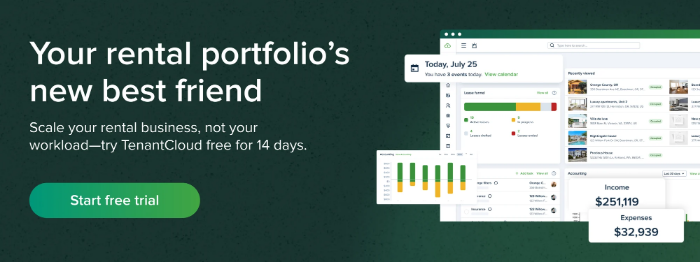
TenantCloud supports the full workflow for new and experienced landlords alike: listing syndication across major rental websites, tenant screening through TransUnion, digital lease creation with e-signatures, automated rent collection with late fees and reminders, maintenance request tracking, and financial reporting – all in one platform that’s easily accessible from desktop or mobile.
Ready to get started? Create your free TenantCloud account today and see how much simpler managing your rental property can be.
Frequently Asked Questions
What is the first step in renting out your house?
Before you list anything, confirm you're legally permitted to rent by reviewing your mortgage terms, HOA rules, and local zoning laws. Then get the property rent-ready, document its condition with photos, and get landlord insurance in place. Skipping any of these steps before your first tenant moves in is where most first-time landlords run into preventable problems.
How do I set the right rent price for my property?
Research comparable rental listings in your area on platforms like Zillow and Realtor.com, filtering for similar size, location, and amenities. Then factor in your actual carrying costs to make sure your rent amount covers your expenses while staying competitive in the local rental market.
What should be included in a lease agreement?
A solid lease should include the rent amount and due date, grace period and late fee terms, security deposit details and return timeline, lease term and renewal conditions, utility responsibilities, pet policy, maintenance procedures, early termination terms, and required entry notice. Use a state-specific template that complies with your state's landlord-tenant laws, since generic templates often miss required disclosures.
Do I need a property manager to rent my home?
No. Many landlords successfully self-manage, particularly when they're local to the property and use property management software to handle the administrative side. A property manager makes practical sense if you live far from the rental, own multiple properties, or aren't comfortable managing tenant relationships and maintenance directly. For landlords who want to stay hands-on, platforms like TenantCloud handle the operational workload at a fraction of what professional management costs.
How do landlords collect rent payments efficiently?
The most reliable approach is online rent collection through a tenant portal. Tenants pay by ACH or card so payments are automatically recorded, and automated reminders reduce late payments before they happen. Platforms like TenantCloud also support autopay and automated late fees, which research shows reduces late payments by up to 90% compared to manual collection.
What's the difference between landlord insurance and renters insurance?
Landlord insurance covers the physical structure, the landlord's liability if someone is injured on the property, and lost rental income when a covered event makes the property uninhabitable. Renters insurance covers the tenant's personal belongings and their own liability. Landlords are strongly encouraged to require renters insurance as a lease condition to ensure tenants have their own protection in place.
Is renting out a room in your house the same as renting out an entire property?
The process is similar but involves added complexity around shared living arrangements. Local landlord-tenant laws still apply, so a lease agreement is just as important, and tenant screening matters as much, or more, since you'll be sharing a living space. The key differences are around defining shared spaces clearly, establishing house rules upfront, and ensuring you have appropriate insurance coverage for a live-in rental arrangement.


