
TL;DR
• Renting to corporate housing companies can mean higher monthly income, longer leases, and payment backed by a company instead of an individual.
• It works best for furnished units near business districts, hospitals, or corporate campuses where relocating employees need temporary housing.
• Read on for how to position a rental for the corporate housing market and what lease terms to expect.
Corporate housing – maybe you’ve heard it mentioned a few times, and are wondering if your property would be a good fit. Maybe you stumbled across Furnished Finder and noticed the going rates, or a fellow landlord mentioned it. Either way, renting your house to corporate housing tenants is different from traditional landlording. It requires more setup, more active property management, but often considerably more income.
If you’re asking yourself, “How to rent my house to corporate housing?” You’re in the right place. Here’s everything you need to know in this TenantCloud guide before jumping in.
What is Corporate Housing?
Corporate housing is like the middle ground between a hotel and a typical lease. It’s typically a furnished setup, usually offering somewhere between 30 days to 6 months of temporary residency. Corporate housing is aimed at working professionals who need a home base. Typical users include traveling nurses, consultants on extended projects, employees relocating for work, or anyone whose company is picking up a somewhat temporary housing tab.
What makes it different from Airbnb is the length and type of tenant. These aren’t weekend tourists or vacationers. Corporate tenant stays are longer and often come through employers or relocation agencies, and they want a space that actually functions like a home.
For more background on what corporate housing is, check out our overview of the basics of corporate housing.
Pros and Cons of Renting Your Property as Corporate Housing
Is it a worthy investment? With corporate housing, you can increase your potential earnings. But it also requires more time from you or your property management team. Let’s go over the pros and cons:
Pros
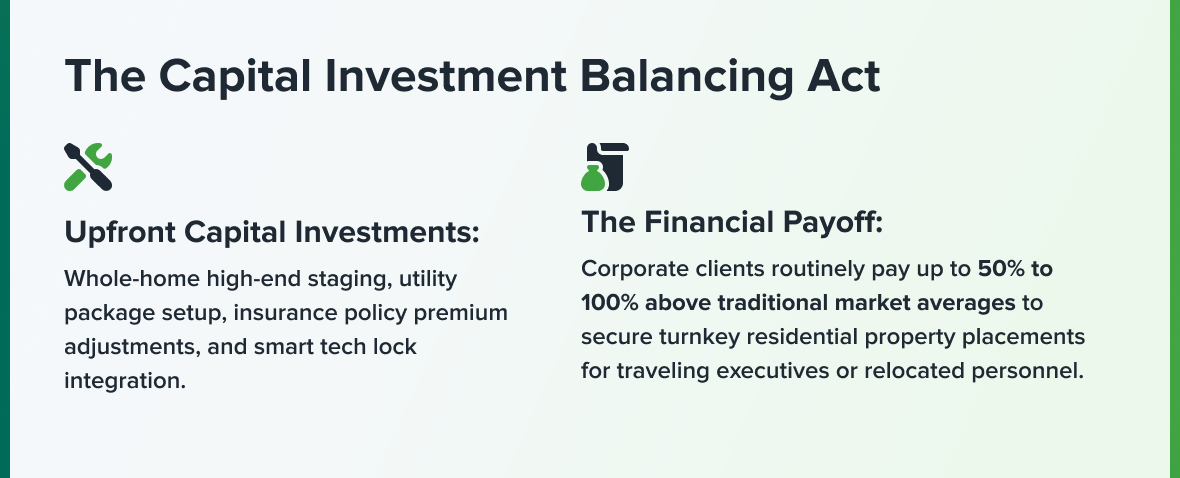
- Cash flow: The main benefit of corporate housing is to increase your net income.
- High-end tenants: Quality tenants who expect to pay extra for premium service and furnishings
- Mid-term flexibility: Quickly changing leases for tenants can mean problem tenants go away faster
- Consistent tenancy: If you build trustworthy relationships with corporations or HR managers, it could result in consistent clients on a regular basis.
On the other hand, managing it can be a lot more work. These cons may include:
- Additional expenses: Furnishing and stocking a corporate house requires significant upfront and ongoing costs
- Increased listing expenses: Shorter leases means more frequent listing and marketing costs
- Cleaning costs: To maintain a professional, clean residence for corporate tenants, you need regular cleaning in between each guest, similar to a hotel or AirBnB.
Additionally, some HOAs won’t allow it at all, so confirming this is an essential first step. This model suits landlords who are hands-on by nature, or who have a system for managing the operational side. So, be sure to consider all pros and cons before starting.
Is Your Property a Good Fit for Corporate Housing?
For better or worse, location determines most of this. A well-furnished unit near a major hospital system, a corporate office park, or a university will stay booked. The same unit in a market with no transient professional population will sit empty.
Two-bedroom and larger units see the most demand, since many corporate housing tenants are either bringing a family for an extended assignment or sharing with a colleague. Studios aren’t impossible, but they’re often a harder sell.
The amenities in your unit are also very important: in-unit laundry (this is vital), fast and reliable Wi-Fi, a proper workspace, and parking.
Legal and Financial Considerations
Before anything else, check your local regulations. Some cities require permits or registration for mid-term furnished rentals, even if you’re not in vacation rental territory. Your HOA’s bylaws are worth reading carefully, too, since restrictions can vary widely.
Insurance is also important not to overlook. Standard landlord policy typically wasn’t written with corporate housing in mind, so call your insurer and ask directly before your first booking. On the tax side, more turnover means more income events and even more deductions to track.
Pro Tip: If you’re fuzzy on what owners owe versus what tenants cover, our piece on whether tenants pay property taxes is a useful starting point.
How to Rent My House: Corporate Housing Step-by-Step Guide
If you’re ready to proceed, here’s a guide to getting started.
- Research the local market first. Look at what comparable furnished rentals are actually going for in your area. Furnished Finder, CHBO, and Airbnb’s extended stay listings are all useful for this.
- Get the property ready. Functional matters more than fancy. Think: solid beds with real mattresses, a kitchen that’s stocked well enough to cook an actual meal, a workspace that isn’t just a barstool, fast Wi-Fi, and in-unit laundry. Optional add-ons like streaming services or covered parking can push your rate up once you’ve nailed the basics.
- Price it properly. Your number needs to cover mortgage, utilities, cleaning costs between stays, platform fees, and gradual furnishing replacement. Modest discounts for longer stays (60 or 90 days) often make more sense than holding out for top dollar on a vacant unit.
- Build a listing worth clicking on. Professional photos, a full amenity list, and crystal clear minimum stay terms. This isn’t the place to cut corners.
- Screen every tenant. The fact that an employer is involved doesn’t mean you skip this step. Run a rental application, do a background check, and be straightforward on your rental criteria.
- Use the right lease. A corporate lease for residential property needs to address the furnished condition of the unit, who covers utilities, what happens if the assignment ends early, and how damage is handled.
Pro Tip: Our lease forms guide is a solid starting point, or you can build one directly through TenantCloud’s lease tools.
Where Can I List My Property for Corporate Housing?
A few platforms are genuinely built for this:
- Furnished Finder: Big with traveling healthcare workers, no booking fees, landlord-friendly setup
- CHBO (Corporate Housing by Owner): More direct connection to HR teams and relocation companies
- Airbnb: Covers a broad audience, though the platform skews more vacation than corporate
- Zillow and Craigslist: Worth using for local reach, especially with furnished filters
Beyond the platforms, direct outreach gets underestimated. Hospital staffing coordinators, HR departments at large employers, and relocation management companies all keep lists of housing they trust. Get on one of those lists, and you may not need to advertise at all.
Common Mistakes to Avoid
- Setting the price too low. Many first-timers base their rate on what a long-term unfurnished rental would cost. That’s the wrong benchmark.
- Buying cheap furniture. A thin mattress or a wobbly desk chair will show up in your reviews. The basics are worth buying well.
- Skipping tenant screening. Employer involvement doesn’t replace your due diligence. A positive tenant experience starts before anyone signs anything.
- Not checking your insurance. Find out what your policy covers before your first booking—not after something goes wrong.
Corporate Housing vs. Traditional Renting
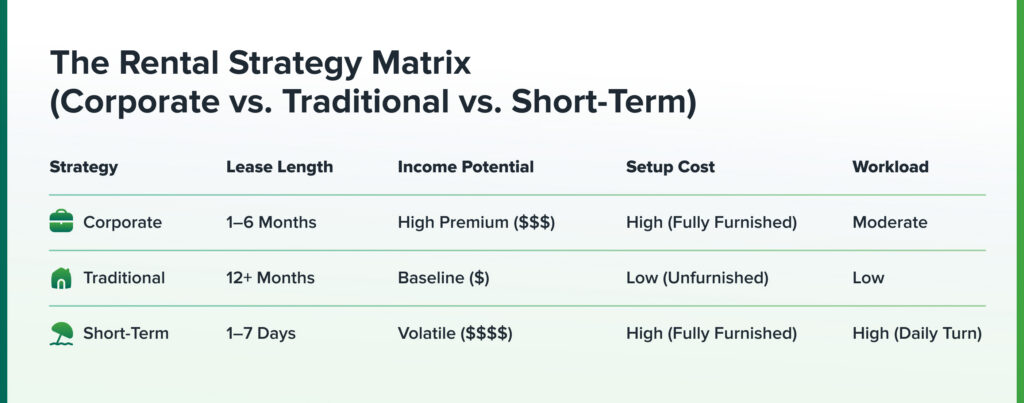
How does each type of rental compare? Let’s add it up.
While neither model is objectively better, there are key differences to know. It really comes down to your property, your market, and how involved you want to be with management. Traditional renting is simpler, but corporate housing can be more lucrative if you manage it well.
If you’re building toward a larger portfolio, TenantCloud’s tools can help you keep the operational side organized as your portfolio grows.
FAQs About Corporate Housing Rentals
How do I rent my house to corporate housing companies?
Get the property furnished and move-in ready, then research mid-term pricing in your area, and list on platforms like Furnished Finder or CHBO. Direct outreach to local HR departments and relocation companies can also generate consistent leads.
Where can I list my property for corporate housing?
Furnished Finder and CHBO are the most purpose-built platforms for this. Airbnb works for monthly stays but attracts a more mixed audience. Zillow and Craigslist can fill gaps locally. That said, direct relationships with relocation companies and hospital staffing teams often outperform any platform over time.
Is corporate housing more profitable than long-term renting?
It can be, since monthly rates tend to run higher. However, the costs are also significantly higher, too – furnishing, utilities, cleaning between stays, and vacancy all cut into your bottom line.
Do I need to furnish my home for corporate tenants?
Yes, fully. Corporate tenants expect to arrive with a suitcase and nothing else. That means beds, linens, a functional kitchen, a workspace, and fast Wi-Fi at a minimum. A property that isn’t truly move-in ready will struggle, no matter how good the location is.
What is a corporate lease for residential property?
It’s a rental agreement where the tenant is a company rather than an individual. It should spell out utility responsibilities, the furnished condition of the unit, and what happens if the employee’s assignment wraps up early.
How long do corporate housing tenants usually stay?
Somewhere between one and six months is typical, with 30 to 90 days being the most common window. Healthcare and consulting assignments sometimes run longer. That mid-term range is really the defining feature of corporate housing, since it’s longer than a hotel stay but shorter than a traditional lease.