
TL;DR
• Finding a good roommate takes real screening, upfront conversations about expectations, and a formal roommate agreement to protect everyone involved.
• Online platforms and community boards are the best places to search, but vetting through references still matters just as much.
• Read on for the full process, from where to look to what questions to actually ask.
Finding someone to split rent with is easy. Finding someone you can trust to pay on time, keep dirty dishes from piling up, and stick to quiet hours is the hard part.
Knowing how to find roommates whom you can rely on means screening candidates the same way a landlord would. That means defining what you need before you look and treating the paperwork as seriously as the search itself. Most bad roommate situations trace back to going with a gut feeling and skipping the due diligence.
This guide walks through the full process of how to search for roommates: deciding what you need, choosing the right places to look, screening candidates, asking the right questions, spotting red flags, and getting the arrangement in writing before moving in with anyone.
Why Finding the Right Roommate Matters
A recent Zillow analysis found that solo renters can pay over $10,000 more per year than people who share housing, with that “singles tax” climbing even higher in cities like New York.
Those numbers make the upside of finding a roommate hard to ignore, but the savings only work when the arrangement itself does. A shared lease can lower housing costs, but it can also tie your finances to someone else’s rent habits, property care, and lease compliance (for better or worse).
Many co-tenant leases include joint and several liability, meaning each signer can owe 100% of the rent regardless of the split they agreed to privately. A roommate who stops paying mid-lease can leave you responsible for the full balance and put your security deposit in jeopardy.
Figure Out What You Need Before You Start Looking
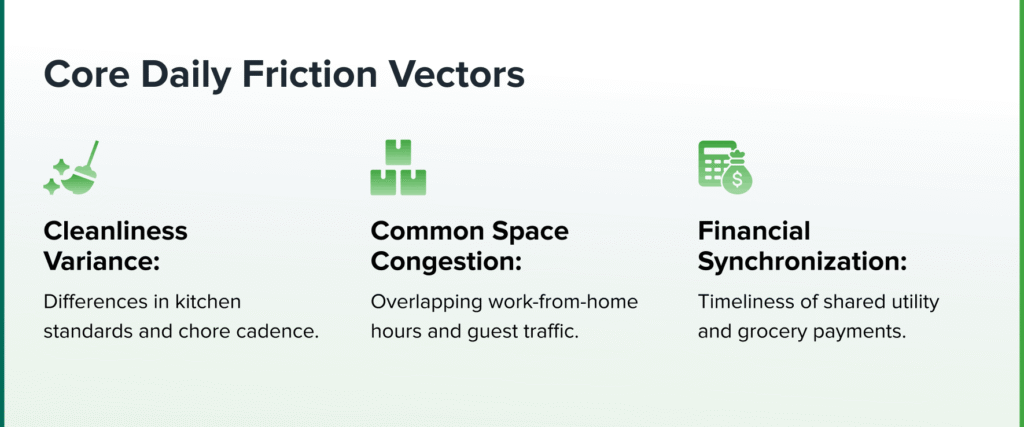
Before you dive into how to find roommates who fit your lifestyle, write down what you can’t compromise on when sharing a space. Start with cleanliness — how often should you and your roommate clean the bathroom, and can dishes sit for an hour, overnight, or days? If you work from home and need quiet between 9 and 5, put that near the top of the list, too.
From there, decide where you stand on overnight guests, pets, smoking, and the shared thermostat. These topics feel simple in conversation, but they can create daily friction if not agreed upon before move-in day.
Pro Tip: Keep a second list for preferences, which means things you would like but could adapt to. For example, maybe you prefer someone with a similar schedule or someone who doesn’t mind splitting an occasional errand. The items on this list are “nice-to-haves” but not non-negotiables.
An otherwise charming candidate who gives vague or evasive answers about your living standards is exactly why this list matters: it keeps you from talking yourself into a bad fit.
Start With the People You Already Know
Suppose you’re not sure how to find a roommate you can trust, start with people who already have a connection to you. A friend of a friend, former classmate, coworker’s sibling, or someone from a professional group could be a good fit. These connections are still a roll of the dice, but they give you far more background than a total stranger ever would.
Post your need for a roommate on social media, mention it in group chats, and ask friends to pass the word along. Someone who isn’t looking for a roommate may still have a cousin, coworker, or classmate who is. Religious communities, meetup groups, alumni groups, and professional associations cast the same net.
Living with someone you know creates a different kind of relationship than seeing them once a week. Some friendships deepen when roommates share a space, while others fracture within the first month over dishes, guests, noise, or cleaning. Even if you know someone well, communicate early and get on the same page before choosing to live with them.
Pro Tip: Skipping a background check for a friend or acquaintance is common, but that connection still needs a quick screening process and reference check. Get the awkward conversation out of the way before you sign a lease, not after.
How to Find Roommates Online
Sometimes your personal network won’t turn up the right roommate, and that’s okay — here’s where to find roommates online once you’re ready to expand the search, along with how much screening each platform leaves to you.
Roommate-matching apps and websites
Roommate apps and matching platforms can help you narrow the search before you start messaging people. These should not replace your own screening process, but they can make the search more targeted than an open classified post:
- Roomi: Offers roommate and room listings with profile verification and safety tools
- SpareRoom: Lets you search rooms and roommates by location, budget, and household preferences
- Roomies.com: Lets users browse roommate profiles, list rooms, and use optional verification tools
- College alumni networks: Connect you with people who share a school background
Social media and community boards
Local Facebook housing groups and city-specific subreddits are free, can generate a lot of responses, and move quickly. Nextdoor tends to work better in suburban markets where homeowners occasionally rent out a room and advertise it to the neighborhood. Craigslist is worth checking in most large metros for sheer volume. The tradeoffs here are numerous: fewer built-in safeguards, greater variability in who posts, and more screening work on your end.
Open platforms can also attract scams, so treat urgency, vague details, and requests for money before a showing as warning signs. We’ll cover scams in more detail later on.
Pro Tip: When posting a roommate-wanted ad, lead with specifics: neighborhood, budget, move-in date, and one or two notes about your lifestyle. Vague, half-hearted posts attract vague, half-hearted responses.
How to Find Roommates in a New City
Looking for a roommate in a new city means choosing a person, a neighborhood, and a lease before you know how the city works. Consider a furnished short-stay rental or month-to-month sublet for your first 30 to 60 days to test commute routes and see how areas feel on weekends and weeknights.
Ask coworkers, neighbors, baristas, or people in local groups which areas fit your budget and routine. A few quick conversations can tell you things a listing will not, like whether parking feels difficult, public transit runs reliably, or a neighborhood gets noisy after dark.
Ask city-specific questions about how long they’ve lived there, why they’re leaving their current living arrangement, and what they like or dislike about the neighborhood. Find out how they handle parking, transit, utilities, packages, guests, and building rules, too. Moving to a new city means you won’t have as much room for error. Leave no stone unturned.
A new-city roommate search should move more slowly than a local one (when possible). If you can afford to, learn the area first, then choose the person and lease that fits your daily life.
Vet Every Candidate (No Matter What)
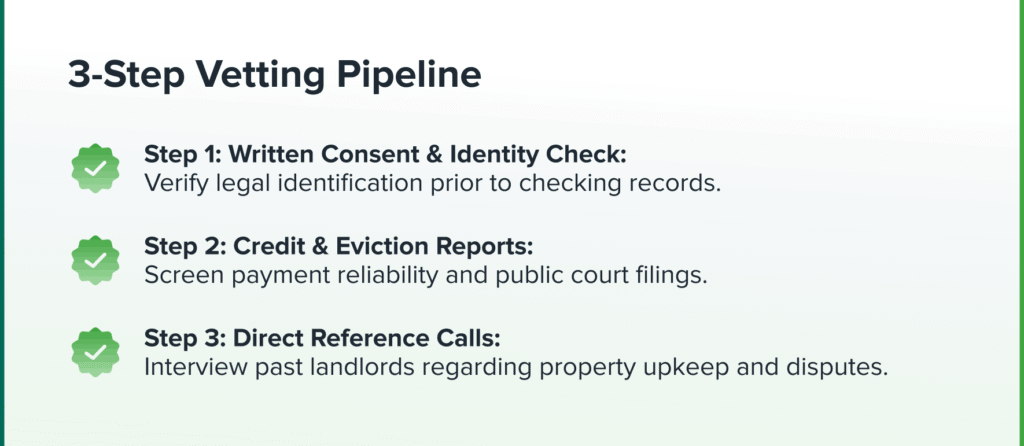
Thorough roommate vetting means a credit report, background check, eviction history check, and identity verification (with written consent obtained before you run any of them) with written consent obtained before you run anything.
Don’t just collect your potential roommate’s references. Actually call them. When doing so, ask previous landlords or roommates directly:
- Did this person pay rent on time?
- Did they leave the unit in good condition?
- Were there noise complaints or disputes with neighbors?
- Were there any late fees, lease violations, or move-out charges?
- Would you rent to them again?
A candidate with only glowing one-word answers from every reference is worth probing further. If every former roommate or landlord was “the problem,” the common denominator is probably the person sitting across from you. Serial movers tend to repeat the same problematic behaviors over and over.
Helpful resources: TenantCloud’s rental application feature lets candidates submit information directly, keeping documentation organized before anyone signs a lease. And for a detailed walkthrough of the entire vetting process, see our guide to screening potential tenants.
Red Flags and Roommate Scams to Know
Some warning signs appear before you’ve ever met the candidate. A prospect who stonewalls questions about employment, pressures you to commit quickly, or is evasive about prior housing is worth passing on without a second thought.
Beyond individual behavior, bad actors follow recognizable patterns:
- Requests to wire a deposit or pay a “holding fee” before any in-person meeting
- Listing photos that reverse-image-search back to other sites or legitimate ads
- Any request for a Social Security number or bank details before anyone signs a lease
Before you share your address with any potential roommate, verify their identity on a video call, and always hold the first in-person meeting in a safe public place.
Verify identity on a video call before you share your address, and always hold the first in-person meeting in a safe public place. Our guide to rental scam patterns breaks down the schemes landlords and tenants encounter most often.
What Homeowners Should Know Before Finding a Roommate
Homeowners figuring out how to find a roommate for a spare room face a different situation than a typical roommate search — if you’re house-hacking to offset the mortgage or just want to split utilities, you carry more responsibility for documenting and structuring the arrangement. A bedroom with a door and written rules for shared spaces sets things up to succeed; a couch in the living room with verbal understandings typically doesn’t.
Before you start the search, figure out whether your space works for hosting a roommate. A bedroom with a door and written rules for shared spaces sets the stage for success. A couch in the shared living room with verbal understandings typically doesn’t.
Remember: Screen a roommate candidate with a rental application the same way you’d screen a primary lease applicant, using the same reports covered in the vetting section above.
Find the Right Roommate. Then Make It Official.
Dishes-in-the-sink disagreements are annoying, but money and move-out disputes are expensive. Once you find a roommate who you think checks all the boxes, screen them before going with your gut instinct. You might just be mistaking good chemistry for a good fit.
It doesn’t matter whether you found this roommate through a friend from college, a roommate app, or a homeowner’s spare-room listing. The screening should always stay the same: a thorough background check, reference calls, and an official signature on the same forms every time.
Start a free 14-day trial with TenantCloud to organize roommate screening and lease paperwork in one place.
Frequently Asked Questions
Where is the best place to find roommates?
Compatibility-matching platforms (Roomi, SpareRoom, and Roomies.com) are great starting points for renters who want pre-filtering before conversations begin. Local Facebook housing groups and city-specific subreddits work well for volume at no cost. For the highest degree of trust, start with your personal network before expanding to online platforms.
Should I run a background check on a potential roommate?
Yes, but only with the candidate’s written consent. Screening reports give a more accurate picture than references alone, which are easy to coach. Online tenant screening tools provide access to credit reports, background checks, and eviction histories in one place.
Do all roommates have to be on the lease?
Name every adult occupant on the lease. Leaving someone off creates liability gaps and limits your options at move-out. Most landlords require you to list all occupants 18 or older. Proper documentation protects both parties.
How do I find roommates safely and avoid scams?
Verify identity on a video call before sharing your address. Never pay a deposit to someone you haven’t met in person. Use reverse image search to list photos before responding to any post. Meet for the first time in public, not at the property.