
TL;DR
• Property management covers everything involved in overseeing a rental on an owner's behalf: tenant placement, rent collection, maintenance, financial reporting.
• Landlords can self-manage or hire a company, and each comes with its own tradeoffs in cost, control, and time.
• Read on for what property management actually looks like in practice and how to decide between the two paths.
If you’ve ever asked yourself, “What is property management?” you’re not alone. It sounds like a complicated niche, but underneath it’s pretty simple: Property management is the process of operating, maintaining, and overseeing real estate properties for owners. This can include residential homes, apartment buildings, commercial spaces, vacation rentals, and industrial properties. If you have rental properties, hiring a property manager means having someone who serves as the link between you and your tenants.
What Is a Property Manager? Property Management Meaning
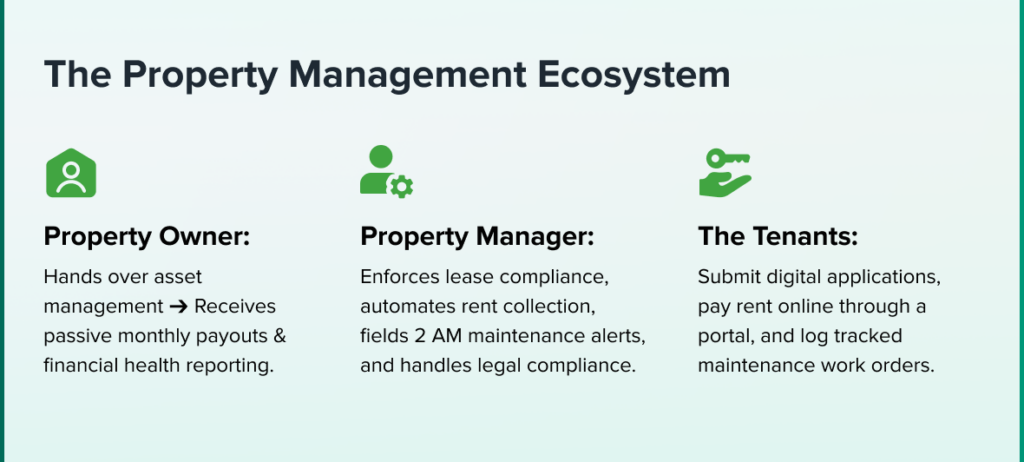
A property manager is a third-party professional who takes care of the daily responsibilities involved in running a rental or investment property. Rather than handling everything yourself, you can rely on a property manager to coordinate tenant communication, oversee maintenance, manage leases, and keep operations running efficiently.
What Does a Property Management Company Do?
So, what is property management, and what does it look like on a daily basis? The specific services vary by company and contract, but most full-service management companies cover a list of core responsibilities and bandwidth that most individual landlords lack:
- Work for individual investors, real estate companies, homeowner associations, or property management firms to oversee everything regarding a rental property
- Can manage everything from single-family homes and apartment communities to office buildings, retail centers, and vacation rentals

Property Management Duties and Responsibilities
- Screening Tenants: Some of the biggest property management duties are sourcing and screening tenants. That includes marketing vacant units across rental websites, fielding questions, scheduling showings, running background and credit checks, verifying income, and reviewing rental history. The goal is to rent to the right tenant who will reliably pay rent and take good care of the property.
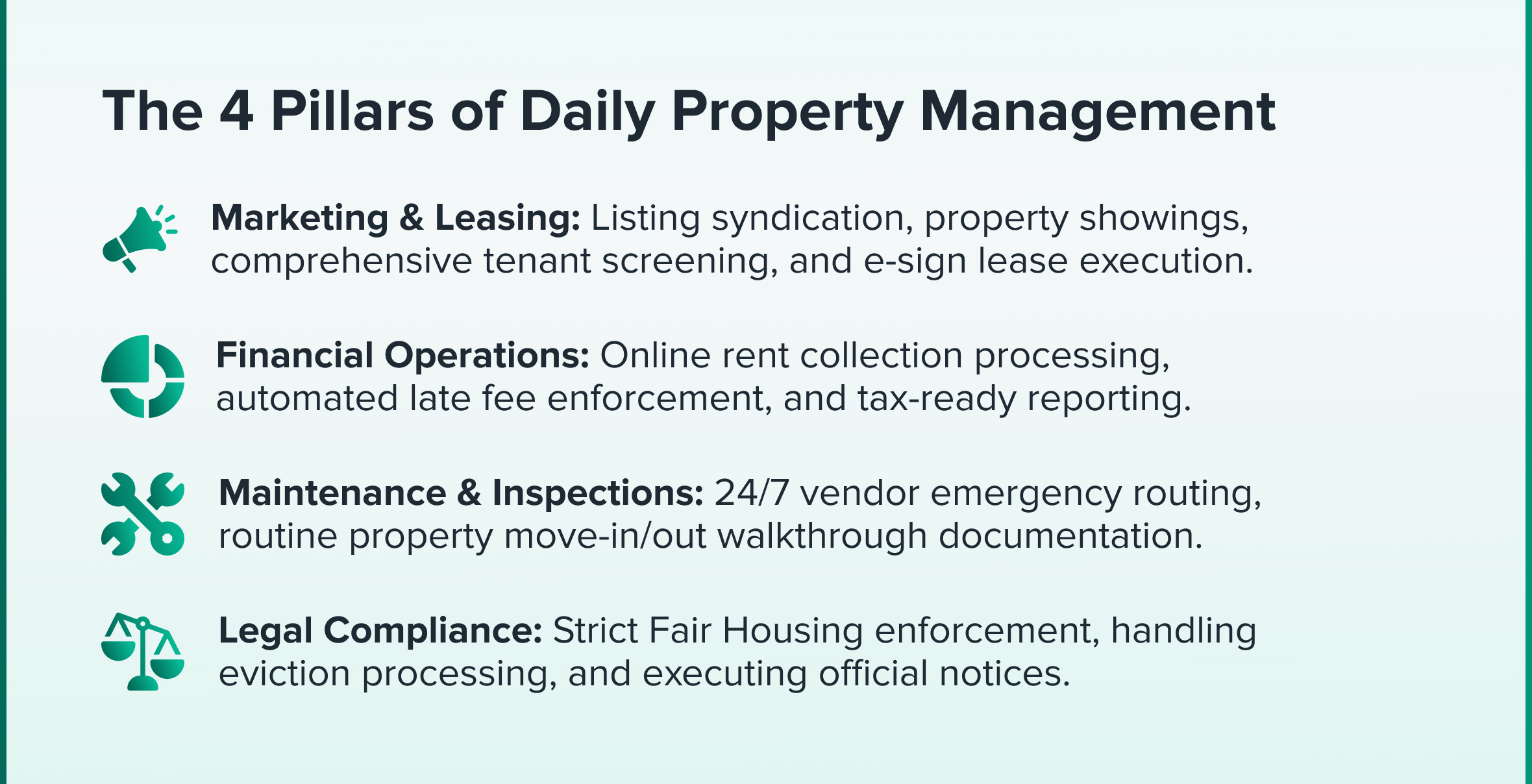
- Lease Execution and Legal Compliance: Draft lease agreements that comply with current local and state laws, manage required disclosures, and remain up to date as regulations evolve.
- Rent Collection: Involves setting up payment systems, sending reminders, enforcing late fees as specified in the lease, and managing delinquencies.
- Other important property management responsibilities include: Scheduling maintenance to keep your property in good condition, providing you with monthly statements, tracking income and expenses, and providing the performance data you need to understand how your property finances are doing.
Types of Property Management
What is property management beyond your day-to-day property manager? It isn’t the same for every property, because there are two different types of rentals.
- Residential property management: Homes, condos, apartments, and multifamily buildings. If you hire a residential property manager, they’ll handle tenant communication, rent collection, lease agreements, move-ins and move-outs, and maintenance coordination.
- Commercial property management: If you own a commercial property, like an office building, retail center, warehouse, or mixed-use development, you’ll want a property manager who’s focused on detailed lease terms, vendor relationships, and big operational responsibilities.
How Property Management Works
If you’re asking, “What do property management companies do and how do they work,” it’s easy—property management begins by hiring a property manager. They’ll usually charge you a percentage of your rental income or a monthly fee.
It usually begins by allowing them to market a vacant rental and screen tenants. Once a tenant is approved, the manager handles lease signing, rent collection, and move-in coordination.
You’ll talk to your property manager regularly, and they’ll send you reports so you know what’s going on with your property. They’ll also send you rent payments after deducting their management fees and any expenses, such as maintenance costs. Many companies use software tools to automate payments, track maintenance requests, store lease documents, and improve communication.
Why Landlords Hire Property Management Companies
Professional property management isn’t the right call for everyone, but there are specific situations where it clearly pays off. For example, if you live far away from your rental property, it can be challenging to respond to time-sensitive issues. Additionally, if you’re expanding your portfolio, you’re also expanding the administrative load.
Landlord-tenant laws vary by state and change over time, so property managers can help you if you don’t have time to stay current with updates. Good management reduces the risk of costly mistakes around lease legality. Also, if you want to prioritize your time and peace of mind over keeping every dollar of rental income, paying a fee to someone else to handle property management can be a straightforward and worthwhile trade.
How Much? Property Management Costs, Etc.
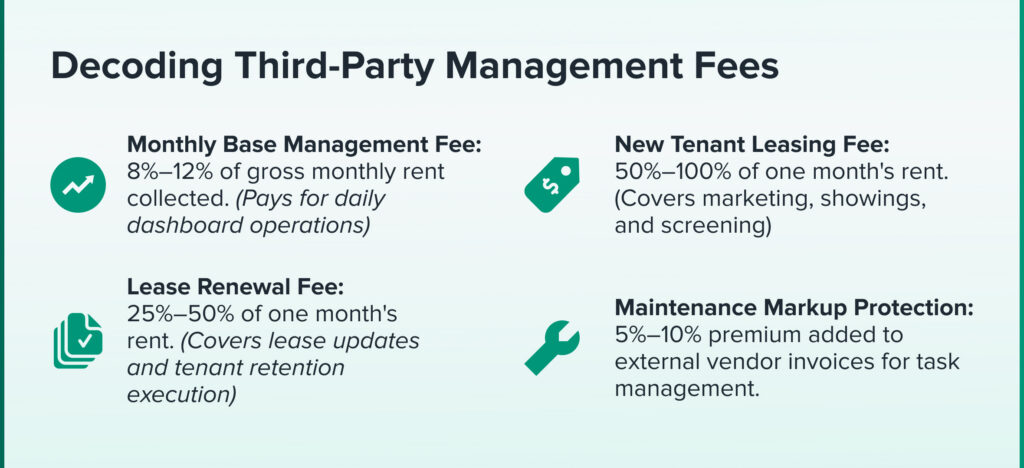
On the financial side, it’s worth being clear about what professional management actually costs, and if you’re asking yourself what a property management company does for their pay, it’s essential to understand what you’re getting.
Property managers typically charge the following:
- 8% to 12% of monthly rent as their ongoing management fee, plus a leasing fee of 50% to 100% of one month’s rent each time they place a new tenant. Some companies add a markup to maintenance costs on top of that.
This is dependent on rates in your local area.
That doesn’t mean the cost isn’t worth it in the right circumstances, though. It just means going in with realistic numbers rather than discovering the full picture after you’ve signed a contract. While hiring a property manager adds expense, you may find that the convenience, time savings, and professional oversight are well worth the investment.
Pros and Cons of Property Management
The pros of working with a rental property manager include having someone to handle the daily responsibilities, like tenant communication, rent collection, maintenance coordination, and leasing support. They can also help reduce vacancies, keep operations organized, and ensure owners stay compliant with local rental laws and regulations.
The biggest cons of hiring a property management pro is that it comes with added costs that can lower your profits. You also might not feel connected to your tenants or wish you had more direct involvement in day-to-day decisions. Since the quality of management can greatly affect tenant satisfaction, property upkeep, and long-term returns, choosing a reliable and experienced company is an important part of protecting your investment.
How to Choose a Property Management Company
Choosing the right property management company can have a major impact on your rental property’s performance and on your tenants’ satisfaction. You should look for companies with experience managing similar properties in the local market, and that offer strong communication, organized systems, and responsive customer service.
Before picking a property management company, take a look at their licensing information, management agreements, and online reviews. If you like what you see, ask questions about maintenance procedures, tenant screening standards, reporting practices, and fee structures to ensure you and the company understand one another’s expectations.
Explore Another Alternative: Property Management Software
Many landlords choose to manage their rentals with online software instead. Using a platform like TenantCloud allows you to track all of our rental income, collect rent payments online, screen tenants, list rentals, and more. It’s like having a property manager in your pocket, 24/7. Try TenantCloud free for 14-days.
FAQs About Property Management
What is property management?
Property management oversees residential, commercial, or rental properties for owners. Managers handle tenant communication, rent collection, leasing, maintenance coordination, inspections, and financial reporting, which helps owners maintain their properties, improve tenant satisfaction, and reduce the time required to handle daily operations and responsibilities.
What does a property management company do?
A property management company handles daily operations for rental properties, including marketing vacancies, screening tenants, collecting rent, managing leases, coordinating maintenance, responding to tenant concerns, and ensuring legal compliance. These services help property owners maintain occupancy, protect property value, and simplify management.
What is a property manager responsible for?
A property manager is responsible for overseeing property operations and tenant relationships through rent collection, lease enforcement, maintenance scheduling, inspections, vendor coordination, and tenant issue resolution. Property managers also help owners maintain compliance with housing regulations while protecting the property’s condition and long-term value.
How much do property management companies charge?
Property management companies commonly charge between 8% and 12% of monthly rental income for residential properties, and may charge extra for leasing, maintenance coordination, or setup costs. Pricing depends on factors such as property size, location, services provided, and the complexity of managing the property or tenant needs.
Do property managers handle maintenance and repairs?
Yes, most property managers take care of coordinating maintenance and repair services for rental properties. This typically includes responding to tenant maintenance requests, scheduling trusted vendors or contractors, overseeing emergency repairs, and performing regular property inspections to identify issues before they become larger problems.
Is hiring a property management company worth it?
The property management meaning includes helping to save property owners’ time, reducing stress, and improving day-to-day operations. Professional management is especially beneficial for owners with multiple properties, busy schedules, or out-of-town investments, and property managers help maintain occupancy, handle tenant issues, and protect the property’s long-term value.