

The question, "Why do landlords not allow pets?" is one that comes up regularly for renters. It's not always clear why these rules apply to rental housing. Many owners view their companion animals, such as their dogs and cats, as family members. So being told that their new home has a strict no-pet policy doesn't feel natural.
From the landlord's point of view, though, the choice to ban pets is clear: Property owners want to safeguard their investments and prevent animals from causing excessive depreciation. Pets are great in general, but for property owners, they introduce real risks. Landlords don't always know how pet rental situations will pan out.
The purpose of this article is to explain the most common reasons why landlords implement no-pet policies. We look at the special legal status of various types of animals, such as emotional support animals and service animals, and smart alternatives to no pet policies, such as pet deposits and pet rent.
TL;DR
Most landlords don't allow pets because of the harm that they can do to their rental businesses. Pets can lead to noise complaints, higher maintenance costs, and even insurance issues. Unfortunately, more than 90% of renters own pets, which is leading many landlords to adopt flexible approaches that enable compromises for both parties, including things like pet deposits, pet rent, and screening. In addition, Fair Housing Act rules require accommodation for service animals, like guide dogs, and even emotional support animals. As such, landlords need to think responsibly and creatively about how to accommodate pets at their properties.
Common Reasons Why Landlords Implement a "No-Pet Policy"
Landlords implement no-pet policies for many reasons. Here are some of the most common justifications:
Damage to rental units
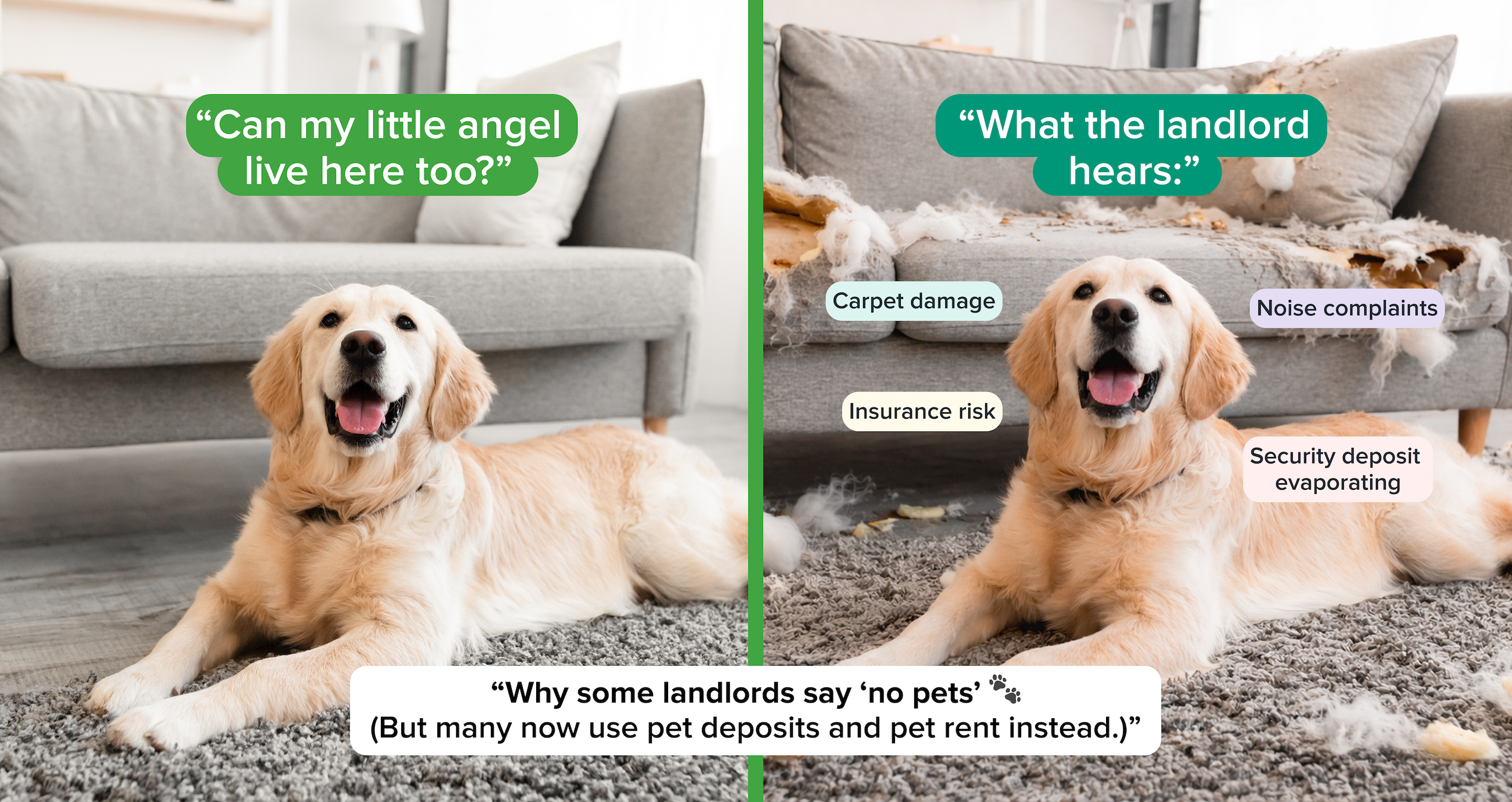
Landlords' primary concern is the damage that pets can potentially cause to their rental units. Pets like cats and dogs have claws which can damage carpets, scratch baseboards and destroy doors.
Animals are also prone to leaving urine or other waste stains in apartments that lead to persistent odors that even professional cleaning can't remove. Sometimes landlords have to rip out damaged objects like baseboards and replace them when new tenants move in. These costs often exceed the standard security deposit, meaning the landlord has to pay out of pocket, reducing their return on investment.
Noise complaints
Noise complaints are another serious concern. Dogs can be loud and disturb neighbors, reducing the value of adjacent units.
Animals can also break rental lease agreement clauses relating to noise levels, especially in multi-unit apartment complexes. A single unhappy neighbor can launch a formal complaint and legal disputes.
Insurance and liability issues
A final issue for landlords is insurance and liability. Carriers may deny property insurance for rental units that host certain types of dogs or that break their original tenancy agreement. Some animals are at higher risk of causing injury to other renters.
Allergies and sanitation concerns can also push up insurance premiums. Insurers know the risk of liability is higher when there are animals on the premises.

Lastly, extra maintenance is a concern. Landlords have to deal with problems like hair removal or treating the environment for fleas when the tenant vacates the property.
Because of these problems, most landlords simply conclude that allowing renters to keep animals on the property isn't worth the hassle. Most adopt a no-pet policy to maintain control.
The Challenges for Pet Owners
Many renters find it challenging to find rental accommodation for themselves and their pets because of landlord incentives. Surveys show that over 44% of renters pass over suitable properties because they prohibit pets, and over three-quarters say that finding pet-friendly accommodation is challenging.
Many cat and dog owners, especially those with multiple animals or large breeds, have to settle for lower-quality rental accommodation. They also pay premium fees or have to go through the emotional pain of putting their animal in a shelter.
Breed restrictions are a major concern. Many landlords do not allow specific types of dogs because of their dangerous reputation. Owners with small dogs often fare better than those of larger ones, but the size of the pet-friendly market is small in most cities.
Responsible pet owners sometimes push back by proving they have trained their animals and offering a premium on top of the rent to cover the landlord's expense concerns. However, the reality is that a few irresponsible pet owners are the cause of the majority of issues.
There is, of course, an upside for landlords. Those that eliminate no-pet policies can benefit from shorter void periods. They can carve out a niche for themselves in the rental market by demonstrating they accept pets, making them more attractive for pet owners.
Emotional Support Animals: Rights and Responsibilities
Emotional support animals are an exception to no-pet policies. The law regards these pets as vital because they are therapeutic for people living with mental health conditions. Research shows that they can reduce anxiety, depression, and other mental health conditions.
Because of this, emotional support animals are protected under the Fair Housing Act (FHA) and come under the category of a "reasonable accommodation." Consequently, landlords have to accept them even if they have a no-pet policy. To qualify, tenants need to provide reliable documentation from a licensed professional healthcare provider proving the animal is necessary for their emotional well-being.
Landlords cannot deny a renter access to a property on the basis that they have an emotional support animal. They are not classified as "pets" in the conventional sense, but are deemed to be a part of a disability support system instead. Therefore, landlords cannot restrict the breed or size of the animal, charge pet deposits or demand pet rents.
It's worth pointing out, though, that the rules regarding emotional support animals and disability-related pets do actually change over time. The core FHA protections remain in place, but document requirements can vary year to year (as occurred in 2025). For this reason, it's critical to work with an attorney who knows the legal process exactly where the rights of renters and landlords reside.
Service Animals and Landlord Obligations
“Service animals” are typically dogs trained in tasks like guiding people who are blind or alerting authorities about a patient’s epileptic seizures. Because these are related directly to disabilities, they have even stronger protections under the FHA and the Americans with Disabilities Act. Under these statutes, service animals are “working partners,” seen as equally essential to a person's disability as their wheelchair.
As mentioned, landlords cannot refuse service animals. They also can't ask about the nature of the tenants' disability, or demand any certificates proving the animal is indeed a service animal. They also can't charge any pet-related fees or deposits or insist that the animal abides by breed or weight limit restrictions
From the property owner's point of view, the tenant still has a responsibility to keep the animal under their control at all times (or the animal’s handler’s control if the tenant lacks the ability to control the animal). Therefore, if a dog causes damage to the landlord's accommodation, the renter remains financially responsible.
What are Pet Deposit, Pet Rent, and Clear Policies
Landlords can protect themselves against the added risk of pets by using various tools, including:
- Pet deposits (a separate security deposit from the standard one, covering animal-related damage)
- Pet rent (a monthly fee charged for keeping additional pets in the property, offsetting wear and tear and minor repairs)
- Clear policies including the size and weight of pets allowed, the maximum number of pets (one pet or more), and rules for waste clean up
Landlords can protect themselves further by using tenant screening methods. For example, they could ask for the pet's veterinary records or ask for past landlord references. They could also request a meet and greet with the animal to see what they're like and whether they can trust them in their property.
Renting to Pet Owners: the Pros and Cons
The main benefits of renting to dog and cat owners is the reduction in void periods. Landlords can often rent more quickly if they allow pets. Good rentals that allow pets are scarce.
The other benefit is higher rental premiums. Many landlords can negotiate above market rates, sometimes up to a 10% increase, just because the new tenant wants to keep a pet.
The downside is unit damage and the time spent on rental property inspection and mediation. There's also a risk of liability from noise or even allergies in multi-unit buildings.
FAQs
Why do landlords ban pets?
The main reason landlords forbid pets is because of the potential damage they can cause. They can also lead to higher insurance premiums and annoy neighbours.
Can landlords reject emotional support animals?
Landlords cannot refuse emotional support animals if tenants provide genuine documentation of a disability-related need under the FHA.
Can landlords impose breed restrictions?
Yes, but only for regular pets, not verified emotional support or service animals.


