

TL;DR
- Pet friendly apartments require clear written policies and documented approval.
- Expect pet deposits, monthly pet rent ($25–$75 per pet), potential specialist insurance, and additional screening requirements.
- Landlords can generally prohibit pets, but assistance animals are protected under federal law.
- Pet friendly policies protect pet owners and landlord’s property.
What Makes an Apartment Pet Friendly?
Are apartments that allow pets the same as pet friendly apartments? The answer is no. A property becomes genuinely pet friendly when policies are clearly written, consistently applied, and specifically designed to protect the landlord's investment and support responsible pet ownership.
Most pet friendly apartments outline :
- Approved pet type and number
- Breed or weight limits for dogs
- Required vaccination records
- Pet deposits or monthly fees structure
- Behavior expectations
Clear pet policies can improve the quality of the rental experience and reduce future misunderstandings. Common concerns regarding pets include property damage, scratches, and noise complaints.
That is why many landlords now rely on formal pet screening processes to check all requirements and documentation before allowing pets into their rentals. This extra step is designed to help property owners assess the potential risks while still ensuring that responsible pet owners receive fair treatment.
Insurance can also be a part of the process, as some landlords require proof of renter’s insurance with pet liability coverage before allowing a tenant to move in. The insurance further helps protect the property and reduce financial exposure.
Costs to Expect in Pet Friendly Apartments
Allowing pets can increase operational costs for property owners. As a result, many pet friendly apartments include additional financial requirements.
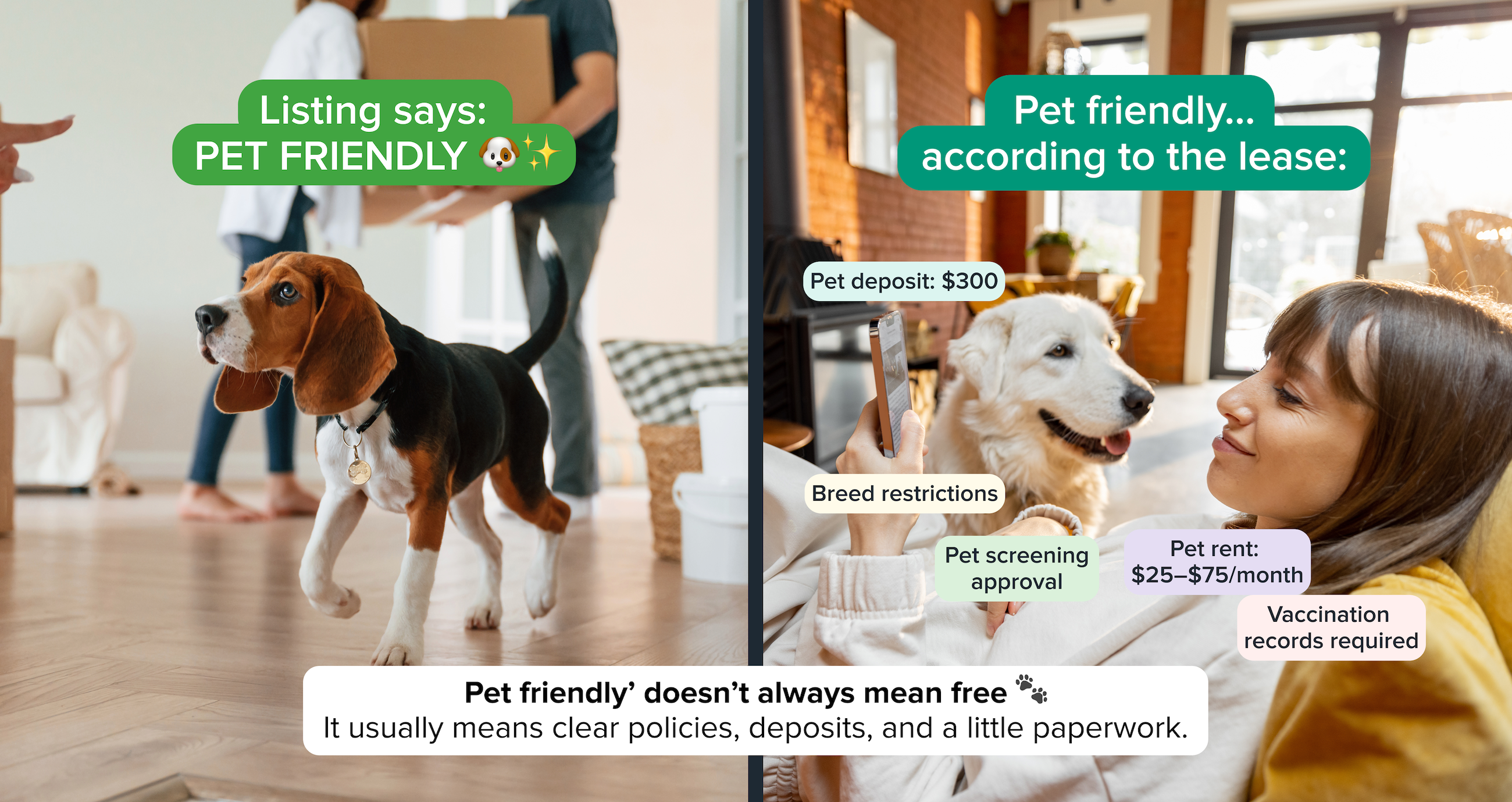
The common cost structure includes:
- Refundable pet deposits
- Non-refundable pet fees
- Recurring monthly pet rent
Monthly fees are ty pically added to base rent and help offset maintenance expenses, cleaning, and general wear. From a landlord’s perspective, these charges are part of the broader financial framework that includes all property management fees.
So, it is important that tenants carefully check the lease before they sign to confirm:
- Whether deposits are refundable
- How monthly fees are calculated
- The limits on the number of pets allowed
- Penalties for policy violations
Transparency protects both sides, which is why all fees need to be clearly outlined in writing to prevent disputes.
Note: Pet friendly apartments are not automatically more expensive, but additional costs should be expected. For tenants, it’s helpful to understand the cost structure in advance so they can budget appropriately and avoid bad surprises.
How to Improve Your Search for a Pet Friendly Home
Finding the right home for your family and pets requires preparation and strategy. The key is to start the search early and use online filters specifically designed to help you explore pet friendly properties only.
What can you do to improve your chances? Here is a step by step guide to follow:
- Gather vaccination records and training certificates in advance
- Request at least one reference from previous landlords or veterinarians
- Prepare to formally request approval if a listing does not clearly state its pet policy
- Always be transparent about the number and type of pets you own. Hiding pets before or after signing the lease is always a bad idea. This can lead to eviction and financial penalties.
The reference is called a landlord reference letter that can confirm on-time rent payments and responsible pet ownership. This will specifically be used to demonstrate responsibility for your tenant application.
Additionally, your search for a pet friendly place needs to take location into account. Consider proximity to parks, open spaces, but also schools if you have kids. Essentially, you want a supportive environment for the whole family.
Can Landlords Say No to Pets in California?
Yes, landlords in California can generally prohibit pets in rental properties. Property owners have the right to establish rental criteria, including restrictions on animals.
However, important legal exceptions apply.
Under The Fair Housing Act, service animals and emotional support animals are not legally classified as pets. Landlords must provide reasonable accommodations for qualified tenants with documented assistance animals, even if the property otherwise does not allow pets.
There are, however, key distinctions to consider:
- Service animals are trained to perform specific tasks.
- Emotional support animals provide therapeutic benefits with proper documentation.
- Pet deposits and monthly fees cannot typically be charged for assistance animals.
California law also contains additional tenant protections that may influence how landlords handle accommodation requests. Landlords must carefully evaluate each request to avoid discrimination claims.
Understanding the difference between standard pets and legally protected assistance animals will prevent compliance issues. It’s worth noting that both tenants and landlords can benefit from reviewing legal requirements.
Signing a Lease in a Pet Friendly Apartment
This is the last step, and you want to make sure that everything is correct. It doesn’t matter how much care you’ve taken during the preparation process; it’s always worth reviewing the lease carefully before signing to avoid any mishaps, forgotten details, or inaccurate documentations.
The lease and/or pet addendum must specify:
- The approved pet type and number of pets
- The deposit amounts for both refundable and non-refundable deposits
- The monthly fees
- Your responsibility for all pet-related damages
Additionally, if the lease states “no pets” or doesn’t have a clear pet friendly section, but the landlord has verbally approved them, you should always seek a written amendment.

Manage Your Rentals with Ease
Try TenantCloud for free for 14-days to manage important details like pet disclosures, leases, tenant details, and more.
FAQs
Are pet friendly apartments more expensive?
They may include additional deposits or monthly pet rent. However, other factors that affect overall rent include the market, location, and property type.
What is the difference between pet rent and a pet deposit?
Pet rent is a recurring monthly fee added to base rent.
A deposit is a one-off payment that may be refundable, depending on lease terms and property condition.
How much are monthly pet fees in a pet friendly home?
Monthly fees typically range from $25 to $75 per pet, depending on location and landlord policy. In addition, tenants may need to pay a refundable deposit, typically between $200 and $500, or a one-time non-refundable fee. Always check the lease to confirm the full cost structure before signing.
Can landlords change pet rules after you sign?
No. Once a lease is signed, both parties must follow its terms unless a written amendment is agreed upon.
Do all pet friendly apartments allow dogs?
Not necessarily. Some apartments restrict certain breeds, sizes, or even animal types.
Can a landlord deny a specific breed?
In many areas, yes, unless local regulations limit breed-specific restrictions. Tenants should always review local housing laws if this becomes an issue.


