
TL;DR
• Automated collection sets up recurring charges that pull rent on a schedule, so neither side has to remember or manually initiate the payment.
• The best platforms send reminders ahead of the due date, apply late fees automatically, and give landlords real-time visibility into who's paid.
• Read on for a comparison of tools by features, tenant experience, and cost.
In the past, rental owners and property managers had to chase after cash envelopes, wait for checks in the mail, and run to the bank to make deposits. But with the rise of automated rent collection tools, those days are over. Today, you don’t have to work hard for your rental income anymore. Instead, you can make the process hands-free and easy for you and your tenants.
With automated rent collection in place, no one has to wonder “when is rent due?” An online platform automatically withdraws rent from the tenant’s bank account and transfers it to the landlord on a specific date. It’s fast, convenient, and helps prevent late and missed payments. Digital rent collection also creates an automatic paper trail, and many platforms include helpful rental accounting tools, too.
If you’re interested in making rent payments easier for everyone involved, the first step is choosing the right platform. When comparing options, there are many factors to consider, including your portfolio size, bank account integrations, payout timing, automated late fees, and tenant experience.
Overview of Rent Collection and Property Management Software
Instead of using 10 different tools, property management software brings everything together in one, organized system. With a centralized software, you can automatically collect rent, apply late fees, generate reports, and keep detailed financial records — all within one dashboard. If you’re wondering how to keep track of rent payments, online platforms are an easy solution.
When tenants pay rent online, you eliminate tedious paper processes. No one has to go to the bank, carry around large sums of cash, or meet in person to hand over a check. Your tenants can quickly pay rent from their phones, computers, or tablets, anytime, anywhere.
Automating the process benefits both sides of the lease. Tenants can set it and forget it, so they don’t have to make manual payments each month. As a landlord, you’ll know payments will roll in on time and in full. Owners gain greater control and visibility into their rental income without the stress of chasing late payments.
While some platforms offer only rent collection tools, other software provides an end-to-end solution for all your property management needs. Many all-in-one platforms include lease generation, tenant screening, maintenance coordination, tenant communication, and financial tools in addition to digital rent collection.
Whether you’re looking for a complete property management software or a simple rent-only app, you’ll need to consider a few key factors. For example, think about how long it takes for you to actually receive the funds in your bank account. Some platforms offer near-instant payouts, while others take up to 7 business days.
Evaluation Criteria for Automating Rent Collection
Keep these points in mind when considering different options:
- Always prioritize the experience your tenants will have when using the system. You want a platform with an easy, intuitive autopay setup process so your tenants aren’t struggling to use the system.
- Look into the platform’s bank account integration and payout speeds to better understand what the deposit process is like. Does your bank account sync with the platform? Will you have to wait days to receive your funds?
- Evaluate the platform’s late payment penalties and partial payment controls. Does it offer automatic late fees, or do you have to apply them manually? Can a tenant pay a portion of their rent, or does the platform require the full amount?
- Think about what the property management software offers beyond rent collection. Does it include rent reporting tools, bookkeeping, and tax prep?
- Remember to look for software that scales with you. If your portfolio grows, will this tool still work, or would you have to make a change?
Use these evaluation criteria to find the best fit for you, your rental business, and your tenants.
Recommended Tools to Automate Rent Collection
Next, we’ll run through seven of the best tools for automated rent collection in 2026.
1. Buildium — Property Management Software to Automate Rent Collection
Buildium’s all-in-one software is great for larger landlords looking to automate rent collection. Tenants can easily add their bank accounts and set up recurring payments. When tenants ask, “Can you pay rent with a credit card?” you can answer yes. Owners get access to a suite of built-in accounting tools, real-time payment updates, and payment reminders.
The platform gives landlords quick access to funds with fast same-day or next-day payouts. If tenants prefer to pay rent in cash, Buildium’s PayNearMe feature allows landlords to track those transactions.
Strengths:
- Autopay: Landlords can access tools to help keep their rental income on track.
- Integrated bookkeeping: Built-in accounting systems automatically record payments and log overdue balances.
- Owner portal: Buildium also features property maintenance, tax assistance, listing advertising, tenant screening, lease generation, and more.
Tradeoffs:
- Buildium offers different tiers depending on the number of units you have. Users pay higher monthly fees as they scale their operations and grow their portfolios. While the Essentials plan is currently $62/month, the Premium Plan is $400+/month.
2. TurboTenant — Free Rent Payment Tools for Landlords and Tenants
If you’re looking for a free solution, consider TurboTenant’s end-to-end solution. There’s no sign-up fee for the free plan, so it’s free for landlords. Tenants pay a $2 ACH fee or a 3.49% fee for debit and credit card payments.
TurboTenant’s a great fit for small, self-managing landlords looking for affordability and automation. In addition to autopay, TurboTenant also allows tenants to sign up for automatic rent reporting to build their credit with each payment. It also offers automated receipts, automated late fees, and integrated accounting.
Strengths:
- Autopay: Once tenants set up autopay, owners can feel confident about their monthly payments.
- Reminders: TurboTenant sends automatic rent payment reminders and payment follow-ups to tenants.
- Tenant credit reporting: Not only does it help tenants boost their credit scores, but it also encourages on-time payments and attracts reliable tenants.
Tradeoffs:
- With the free plan, ACH payments process in 5–7 days. However, the paid tier offers a faster payout speed of 2–4 days. For both plans, debit and credit card payments clear in 1–3 business days.
3. Avail — Simple Property Management Software to Collect Rent Online
Avail is an easy, reliable way to collect online rent payments, with autopay and integrated accounting features. Independent landlords with a few units benefit from its user-friendly, simple, all-in-one property management solution. If landlords have a free plan, tenants pay $2.50 for ACH transfers, which take 5–7 days to clear into the owner’s account.
The platform offers helpful tenant education features and built-in rent reporting tools. It also includes automatic late fees, as well as one-time and recurring charges.
Strengths:
- Autopay: Once tenants set up autopay, they can make their monthly payments without any manual effort.
- Customizable reminders: Create and schedule automated rent reminders to keep tenants on track.
- Accounting export: Easily prepare financial reports with Avail’s bookkeeping and export tools.
Tradeoffs:
- Deposit timing is slower on the free tier, taking up to a week in some cases. However, landlords on the paid plan get next-day access to rental income.
4. Rentec Direct — Rent Automation with Robust Accounting
If you need advanced accounting tools and autopay, Rentec Direct may be a great option. Unlike most online rent payment tools, Rentec Direct offers free ACH transfers for both landlords and tenants. However, tenants pay a 2.95% processing fee for credit and debit card payments.
Tenants can set up recurring payments, but the platform also allows landlords to accept rent payments through checks and cash. If a tenant uses a paper payment method, owners can mentally enter those deposits as needed. Rentec Direct also enables late fees, payment reminders, and rent tracking.
Strengths:
- Free ACH transfers: Landlords and tenants get access to zero-fee ACH transfers, making monthly payments more affordable.
- Reconciling tools: Keep your rental income and expenses in sync with integrated accounting tools.
- Training support: Rentec Direct provides helpful customer support to help landlords and tenants learn their platform.
Tradeoffs:
- Even though the platform has a great support team, it’s not the easiest software to navigate — especially for landlords and tenants who aren’t comfortable with digital processes. In most cases, the user interface requires a learning curve.
5. TenantCloud— Scalable Property Management with Rent Online Tools
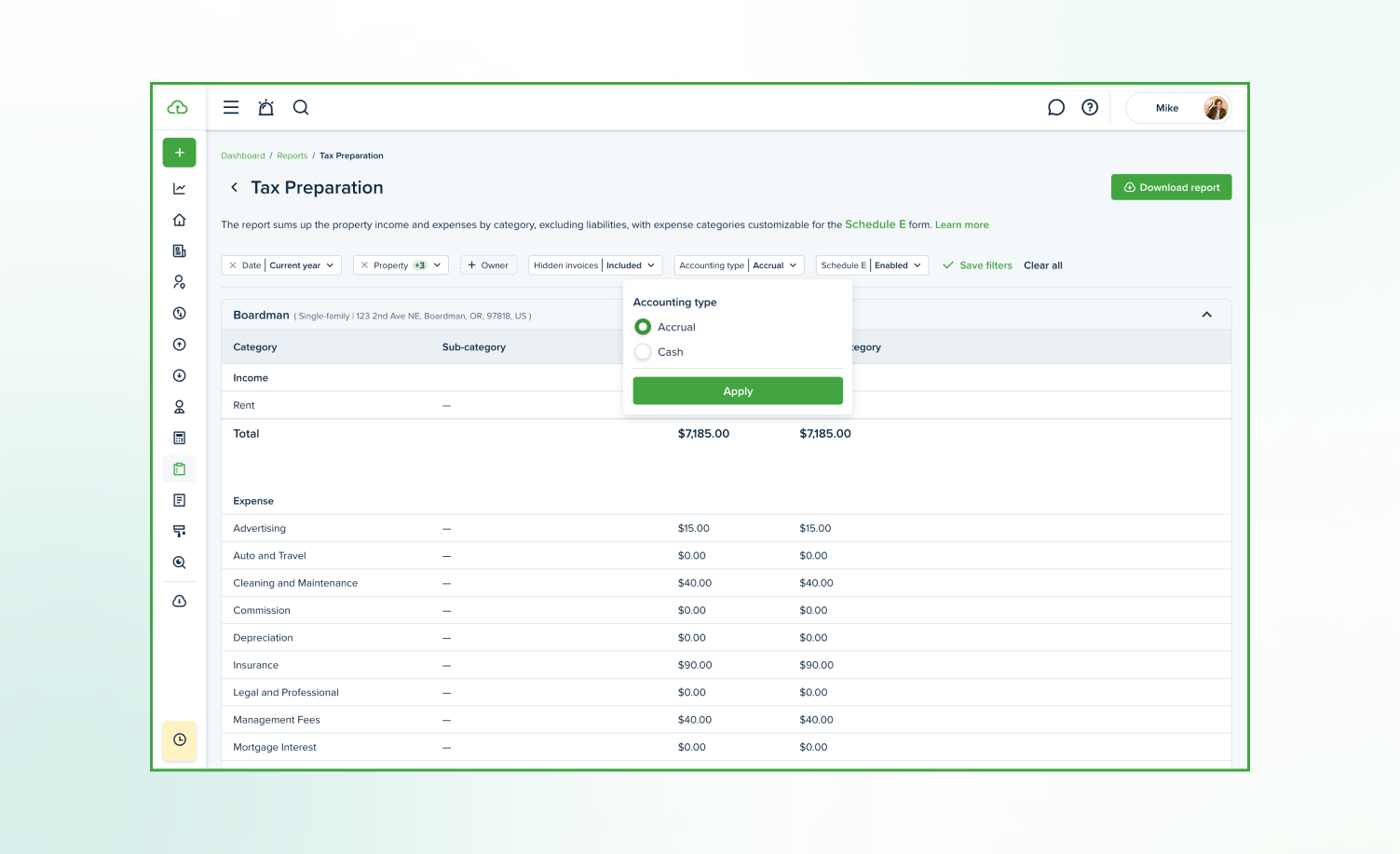
TenantCloud’s tech-enabled rent collection provides accounting and automation tools to streamline your income stream. It gives small property managers and owners of mixed portfolios a range of tools, including automated late fees, rent reporting, and owner and team management.
When tenants pay rent, landlords get next-day or same-day access to funds. When users enroll in rent reporting, they can access free ACH transfers.
Strengths:
- Autopay: Get access to autopay tools to streamline monthly payments for both landlords and tenants.
- Tax reports: Generate tax-ready reports such as depreciation and amortization in seconds.
- Mobile app: TenantCloud’s mobile app has 4.5/5 stars on Google Play Store and 4.6/5 stars on the App Store.
Tradeoffs:
- Users need a paid plan to access certain features, including tax reports.
6. PayRent— Rent-Only Platform Focused on Payments and Reporting
PayRent is a rent-collection-only option for landlords who prioritize tenant rent reporting to credit bureaus. Beyond rent reporting, the platform offers automated late fees, payment tracking, recurring payments, and customizable pay schedules. Landlords can set up weekly, bi-weekly, or monthly billing based on their lease details.
Tenants can pay their monthly bill using credit and debit cards as well as ACH bank transfers. If you only need a platform to automate payments and collect rent online, PayRent offers an efficient solution.
Strengths:
- Autopay: PayRent enables autopay, so monthly payments are hands-free and easy.
- Secure transfers: The platform uses secure encryption to protect sensitive data and prevent fraud.
- Rent-specific user experience: Unlike generic payment apps, PayRent works specifically for landlords and tenants looking to pay rent online.
Tradeoffs:
- Because it’s a rent-only service, PayRent doesn’t include a full suite of property management features.
7. P2P Apps (Zelle, Venmo, PayPal)— Quick Pay Rent Options
Outside of rent-specific software for landlords, some owners use peer-to-peer (P2P) apps to collect their monthly payments. However, they’re not the best option. Even though they’re convenient and familiar, they don’t offer the security, automation, or tools made for landlords.
While many tenants already use them in their daily lives, P2P apps often set payment limits that can result in incomplete payments or nonpayment of rent. They can work for informal agreements and single-unit landlords, but it’s not as good as dedicated rent collection software.
Strengths:
- Ubiquity: Most tenants already know how to use Zelle, Venmo, and PayPal, making them easy and straightforward.
- Instant funds transfers: Once tenants pay you, you don’t have to wait days for the funds to clear into your bank account.
Tradeoffs:
- P2P apps don’t enable automatic late fees, so you have to manually enforce any late payment penalties. Additionally, these platforms offer weaker bookkeeping tools compared to other all-in-one property management software.
Quick Comparison of Platforms to Pay Rent Online
Buildium | Full-service property management workflows |
TurboTenant | Cost-conscious independent landlords |
Avail | Owners with small portfolios that need rent reporting |
Rentec Direct | Landlords who want strong accounting tools |
TenantCloud | Mixed portfolios and owner access |
PayRent | Rent-focused processing and credit reporting |
P2P Apps | Ad-hoc or informal rent transfers |
Use this as a roadmap to help you find the right match based on your needs and circumstances.
How to Choose the Right System for Landlords and Tenants
Every landlord and business is unique, so automated rent collection platforms aren’t one-size-fits-all. Keep the following points in mind to select an app that makes sense for you.
Choose Based on Portfolio Size and Property Management Needs
If you have a large portfolio with many units, you may want to choose an all-in-one property management software. You’ll be able to handle your entire workflow, including rent collection, in one place — which is key when overseeing multiple properties.
On the other hand, consider a rent-only platform if you only have a few units. Keep it simple when you have one or two properties and only choose the rent collection tools you need.
Choose Based on Bank Account Integration and Payout Timing
Check whether the platform offers ACH integration and what the transfer fees are. As a best practice, we recommend prioritizing software with 1–2 day payouts to avoid cashflow delays. You don’t want to end up paying for operational expenses out-of-pocket every month while you wait for funds to clear.
Choose Based on Partial Payments and Automatic Late Fees
To protect your position during evictions, you’ll want a system that blocks partial payments. Otherwise, tenants may be able to disrupt the legal proceedings by sending you a small amount, depending on your state’s laws.
For consistent late fees for rent enforcement and fewer admin tasks, your platform should have configurable automatic late fees based on your lease terms.
Choose Based on Tenant Experience and Payment Methods
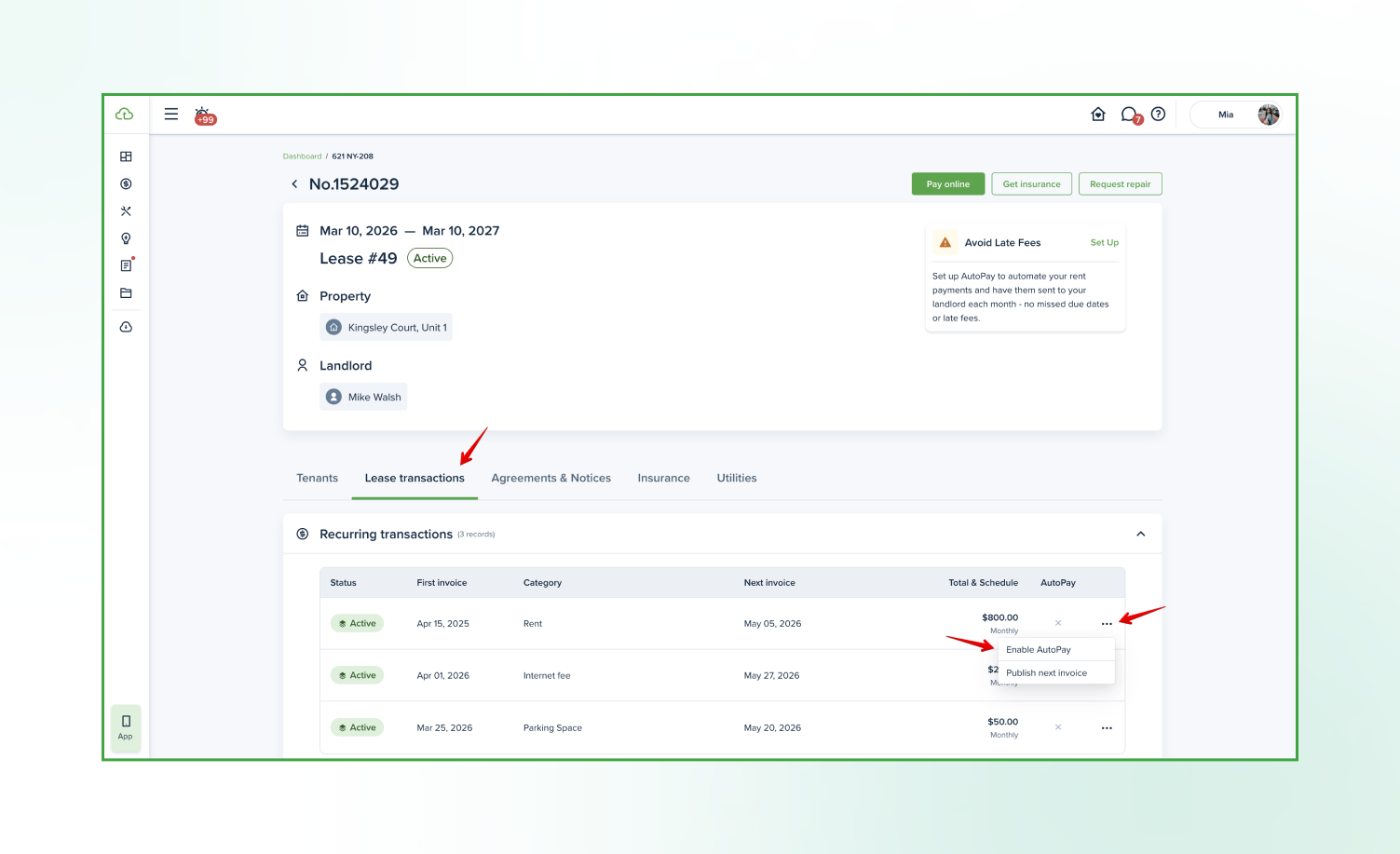
Don’t forget to consider your tenants. Create a flexible rent payment process by choosing a platform that supports multiple payment options, such as ACH and card payments. Additionally, mobile-friendly apps are a great way to encourage tenants to actually use the platform.
Which Platform to Recommend for Common Scenarios
If you’re a property manager who needs end-to-end tools, TenantCloud is your best bet. On the other hand, we recommend TurboTenant for small landlords who want budget-friendly automation. When rent reporting is a must-have, consider opting for PayRent.
Final Notes on Automating Rent Collection and Monthly Payments
Before you go all-in on one rent collection software, we recommend narrowing the options down to your top two platforms. Always test-run both platforms on a live unit to get a full understanding of what each software offers.
In addition, we recommend documenting payout and fee policies for tenants. Providing a written explanation is a great way to avoid misunderstandings and keep everyone on the same page.
Use this guide to make rental income efficient and stress-free by finding the right automated rent collection platform for you.
Automated Rent Collection FAQs
What is automated rent collection?
Automated rent collection is an online system that automatically withdraws the rent amount from a tenant’s account and deposits it into the landlord’s account on a fixed schedule. Tenants set up for recurring payments once, and that’s it. Landlords gain greater visibility and control over their rental income while preventing late or missed payments. Everyone wins!
What are the downsides of ACH for rent?
While ACH is a secure, reliable way to transfer money between the tenant’s and landlord’s bank accounts, it’s not an instant process. In some cases, ACH transfers can take up to 7 days to fully process.
What is the 2% rule for rentals?
The 2% rule helps landlords determine the best price for their properties. It states that the unit’s monthly rent amount should be at least 2% of the purchasing price to be profitable. For example, if you purchase a home for $200,000, you should price it at about $4,000 per month.
Can one affordable platform handle both rent collection and tenant screening without requiring two subscriptions?
Yes. Property management platforms that include both tend to cost less overall than separate tools. TenantCloud combines ACH rent collection, TransUnion-powered tenant screening, lease storage, and maintenance tracking in one place. Screening is pay-per-report, so you only pay when you actually have an applicant to screen. For landlords managing five units or fewer who want to keep overhead down, consolidating to one platform is typically the most cost-effective approach and removes the friction of managing two separate logins and payment accounts.
What’s the best hands-off rent collection option for a few units?
A good rent collection platform offers hands-off tools like automated payments and reminders, helping rent collection run on its own. TenantCloud allows landlords to set up recurring payments, reducing late rent and the need for constant follow-ups.