
TL;DR
- Structure comes first: Write a clear lease, be fair in your rent practices, and respect privacy.
- Communication prevents complaints: Set contact expectations at signing, put what matters in writing, and confirm receipt the same business day.
- Follow-through builds trust: Itemize deductions, honor every written commitment, and give a long-tenured tenant the benefit of the doubt on a first slip.
- Consistency protects you: Apply the same written policies to every tenant to keep enforcement above-board and sidestep Fair Housing trouble.
- The right tools cut friction: Portals, tracked maintenance, and time-stamped inspections keep a single audit-ready record on both sides to reference.
- Retention beats turnover: Preventing a single vacancy a year recoups the margin without raising rent.
Finding a good tenant is only half the job as a landlord. Keeping that tenant long-term is the goal, and where a strong landlord-tenant relationship starts paying off. Every renewal you sign can save thousands in turnover costs, including lost rent during a vacancy, cleaning, repairs, and leasing fees.
The landlords with the best retention rates rarely own the newest buildings or the nicest finishes. They communicate clearly, respond to problems, apply rules consistently, and treat tenants with respect. These behaviors help renters feel welcome and willing to continue renting.
If you want to build trust with tenants and secure an extended lease agreement, follow these tips.

How to Shape a Positive Landlord-Tenant Relationship
A good landlord-tenant relationship rests on structural conditions far more than personality. Fannie Mae’s renter survey found that 63% of renters view their landlord relationship positively, leaving more than one-third who see room for improvement. The difference usually comes down to five areas:
A clear lease agreement heads off most disputes, since handshake terms are the ones both sides remember differently. Walk through every fee, rule, and maintenance responsibility at signing, and both parties will leave knowing what they agreed to.
Responsive maintenance coordination ranks near the top of what tenants value, and it resurfaces at every renewal. A patch-and-collect approach, where the landlord authorizes the cheapest fix and moves on, signals that the person in the unit matters less than the unit itself.
Fair, predictable rent practices matter because tenants build a monthly budget around the number on the lease. Landlords who give proper notice before an increase, enforce late fees by the book, and never spring an undisclosed charge on a tenant earn solid reputations that spread.
Respect for tenant privacy is a statutory obligation in most states and a professional duty everywhere else. State statutes typically require advance notice before a landlord enters a rental unit (often 24 hours), and an unannounced visit is often treated as a quiet enjoyment violation (whether or not it technically is).
Mutual reliability ties the whole tenancy together. Landlords finish promised repairs, tenants pay rent without reminders, and neither side has to chase the other. A landlord who lines up the renewal weeks before expiration, at the rate promised months earlier, banks on trust that pays out a year later.
Tenants register which of these a landlord delivers, usually within the first few months. Clear expectations, timely repairs, predictable rent, and respected privacy give a good tenant fewer reasons to scroll through listings.
Communication Tips That Work
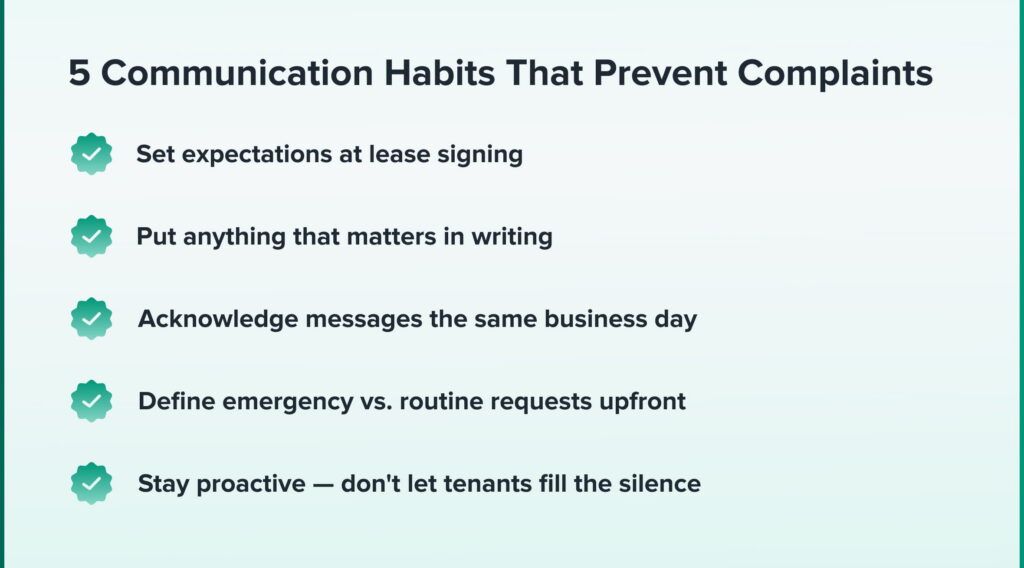
Poor communication turns a routine repair request into a formal complaint. It is also the cheapest of these problems to fix, and often the one that landlords neglect time and time again.
- Set expectations at lease signing by covering your preferred contact channel, typical response time, and after-hours emergency protocol. Tenants who know how to reach you will stop escalating routine requests into emergencies.
- Use written communication for anything that matters, even when it feels like overkill. A verbal promise to repaint the kitchen before move-in leaves nothing to point to when move-in day arrives. Text threads and email chains build the paper trail that can settle a disagreement before it grows.
- Acknowledge messages quickly, even when you don’t have a full answer. Confirming receipt by the end of business stops the follow-up cascade that builds when tenants feel ignored, while a true emergency gets an immediate response. A quick “Got it, I’ll update you as soon as possible” outperforms silence every time.
- Define emergency repairs versus routine requests in the lease and in the welcome packet. A tenant texting about a running toilet at 11 p.m. and one whose furnace fails in February require different responses. Both should know which designation applies to them long before the moment arrives.
- Stay proactive by notifying tenants before an issue reaches them (scheduled maintenance, building-wide changes, holiday availability). Landlords stuck in crisis-mode communication find tenants have already filled the lack of communication with their own assumptions, which are far harder to correct.
Build Trust with Tenants Using Consistent Follow-Through
Tenants notice how often you follow through. It’s important to be reliable to build transparency and trust.
- Start with financial transparency. Itemize every deposit deduction with photos, explain fees before you charge them, and never bill a tenant for normal wear and tear. Airtight documentation gives tenants fewer grounds to push back and hands you a non-negotiable record if a damage claim goes sideways.
- Honor the lease agreement in both directions. If you commit to replacing the HVAC unit by October 1 or to holding a renewal rate through May, hold firm on both, even if the vendor quote comes in higher than budgeted. One kept written commitment does more for trust than a one-off goodwill gesture.
- Give reliable tenants the benefit of the doubt on a first mistake. A good-standing tenant with 14 months of clean payments who runs three days late in month 15 usually has a reason worth a phone call, not a formal lease violation notice. Consider their track record before you reach for the lease.
Tenants who feel valued early have fewer reasons to leave, and the retention math is not subtle. Recent research estimates tenant turnover costs at $1,795 per unit, per month, which lands hard on any portfolio.
What to Look For: Good Qualities in Landlords and Tenants
Both landlords and tenants want the other to do what they said they would do, plain and simple. What each side watches for overlaps almost entirely.
What Makes a Good Tenant
A tenant who pays rent on time without reminders is the strongest single predictor of a low-maintenance tenancy. Beyond consistent payment, landlords watch for a handful of practical habits:
- Early problem-flagging: Reporting a drain-clogged sink before it becomes a waterlogged floor
- Good-neighbor conduct: Respecting shared spaces and quiet hours without enforcement
- Professional communication: Staying civil and specific even during a disagreement
- Respect for the terms: Staying within the lease on occupancy, pets, and subletting
A diligent, lease-honoring tenant keeps the tenancy predictable, and that predictability is worth more than any single month’s rent.
Consistent tenant screening lets landlords verify rental history, income, and past lease performance before they approve anyone. When finding your next renter, vet every applicant against the same written criteria, and weigh prior-landlord references alongside the rest of the file.
What Tenants Look for in a Landlord
Responsiveness tops the list. Ask renters what they look for in a landlord, and most describe someone who answers quickly and keeps them posted while a repair is still open.
Tenants understand that repairs take time, and most wait without complaint as long as the landlord stays in touch. For example, a maintenance request left unacknowledged for four days does more damage than one that takes two weeks to close out with steady updates.
Beyond responsiveness, three things come up again and again when renters talk about a landlord they would rent from twice:
- Transparent lease terms: No buried fees and no clauses that appear only at move-out
- Respect for their privacy: Proper notice before every entry, without exception
- Professional treatment: The same tone on day one, during a dispute, and at move-out
A landlord who disburses deposits fairly, finishes repairs on schedule, and stays even-keeled during disputes earns the kind of trust that keeps units filled.
Tools That Support Stronger Tenant Relations
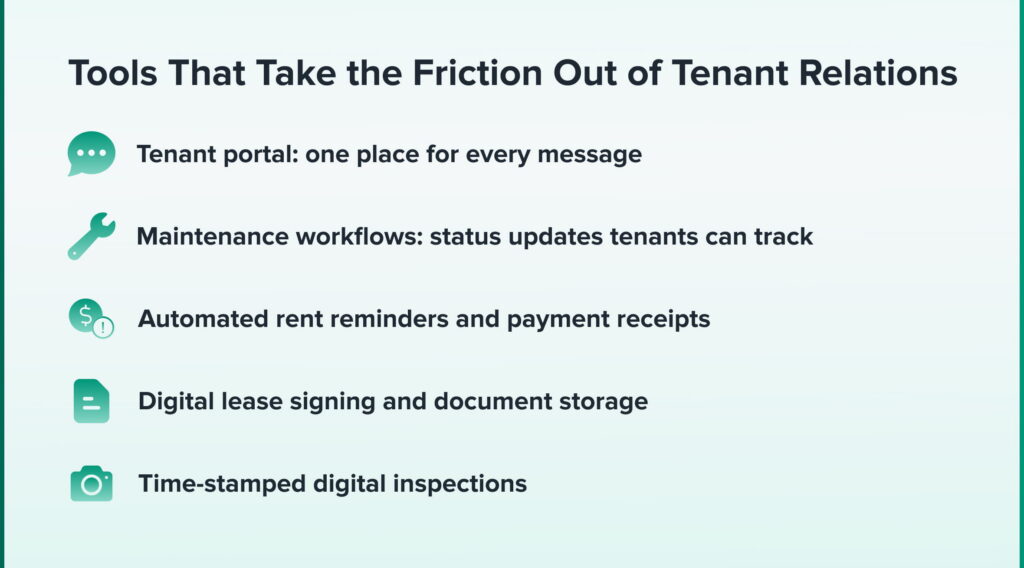
No landlord can reliably track maintenance timelines, communication history, and renewal dates in their heads across multiple units. The right systems keep those details organized and reduce the administrative friction that can strain renter relations.
A tenant portal consolidates all messages into one place. Picture a tenant insisting the lease renewal notice never arrived. Without accessible proof, the landlord is forced to scour through years of emails.
Maintenance request workflows with status updates do more for tenant patience than speed does. A tenant who can watch a request move through the maintenance queue (received, assigned, scheduled) stops sending follow-up texts, since the queue already answers their burning questions.
Features like automated rent reminders help tenants stay accountable without the stress. Additionally, sending proof of payment, like a payment receipt, provides transparency.
Digital lease signing and document storage let either party pull up their exact lease language on demand. Disagreements over the contract’s terms are easier to resolve once neither side has to dig through a filing cabinet to find the document.
Digital rental inspections with time-stamped photos head off the most common source of move-out conflict. Inspection-ready shots at move-in and move-out give both parties a record they can open online anytime, which closes out most damage-related issues before they start.
Together, your tools should create a more organized and consistent process for managing tenant relations across communication, payments, maintenance, and documentation.
Handling Disputes Without Losing the Tenancy
Every tenant-landlord relationship eventually runs into conflict, and the response separates landlords who keep good tenants from those who run a revolving door. The right move depends on the issue at hand:
Late or Partial Rent
Respond the same day and restate the lease’s late-fee terms in writing. A tenant with a clean history who misses one month usually can resolve the issue in a single conversation. In contrast, a frequently late-paying tenant needs a firm, fully documented approach.
When payment arrives late (or never arrives at all), learn exactly what to do about a tenant who isn’t paying rent.
Repair Backlogs
A backlogged repair queue does more damage to relationships than most single incidents. Acknowledge the delay, commit to a specific completion date, follow through, and confirm in writing once the work is done. A second missed deadline is when a cooperative tenant starts building a case against you.
Security Deposit Disagreements
Most security deposit disputes trace back to a poorly documented move-out file. Photograph and receipt every deduction, return the balance within your state’s deadline, and use the move-in checklist as the baseline. Make sure your lease is compliant before you discuss a single term.
Serious Lease Violations
Damage, smoking, and illegal activity require your state’s notice-to-cure process, documented at every step. Handle a noise violation or an unauthorized sublet by offering a path to compliance before you serve a formal notice.
Never stoop to retaliatory tactics like changing locks or cutting a tenant’s utilities, as self-help eviction is illegal and creates liability far beyond the original problem.
One bad month rarely ends a good tenancy. Tenancies unravel when a landlord goes silent, plays favorites, or lets a disagreement turn personal. Handle disputes in writing, apply the lease evenly, and most tenants will ride out the rocky patch and sign again.
A Stronger Relationship Means Fewer Vacancies
Low-turnover portfolios run on a strong landlord-tenant relationship that gives renters a reason to stay. Granite counters may land the tenant, but they will not be the reason they renew. Every vacancy you prevent protects rental income and avoids re-leasing fees, cleaning costs, and weeks of carrying costs.
Getting there does not take five separate systems bolted together.
TenantCloud combines tenant screening, online rent collection, maintenance tracking, and time-stamped inspections in one place, so every interaction that builds the relationship lives in the same record.
Start a free 14-day TenantCloud trial and put your entire tenant workflow in action today.
Frequently Asked Questions
How long does it take to build a good landlord-tenant relationship?
Typically, the first 30 days set the standard. How fast you resolve the opening maintenance request, how smoothly the move-in goes, and whether you honor your early commitments all shape what the tenant expects afterward. Landlords who earn trust in month one spend the rest of the lease drawing on it.
What should landlords do before a tenant moves in to start things well?
Walk through the lease at signing rather than collecting a signature and moving on. Finish every promised repair before the tenant arrives, document the unit’s condition with photos, and send a welcome note with your contact details. A move-in-ready unit and a clear first conversation prevent more trouble than anything you do down the road.
How do I handle a tenant who is consistently late on rent without damaging the relationship?
Separate the one-off from the pattern before you respond. A single late payment from a long-reliable tenant usually warrants a conversation. In contrast, a habitually tardy tenant forces you to enforce the lease’s late-fee terms and document every exchange.
What is the landlord's legal obligation to respond to maintenance requests?
State law governs the timelines, and they vary widely. Most states require repairs of habitability issues within a reasonable time frame, with the exact deadline depending on how serious the condition is. (Emergencies demand the fastest response.) Review tenant rights and responsibilities and your state’s landlord-tenant laws for the specifics.
Can a strong tenant-landlord relationship survive a rent increase?
Tenants usually accept an increase when they get proper notice and trust the landlord to be straightforward about the reason. A landlord with a documented record of responsive maintenance keeps more trust through the change than one whose tenancy has stayed purely transactional. How you deliver the increase matters as much as the number itself.